






Packaging symbols explained
Details of commonly used transit packaging symbols
You’ve probably noticed the recycling symbols on packaging, but have you also spotted the numerous symbols that appear on corrugated transit packaging? If so, you may wonder what they all mean and whether you should use any of them on your own cardboard packaging.
In this guide, we’ll help you make sense of the most common symbols you’re likely to encounter on industrial packaging. You’ll learn which symbols highlight the best handling practices, which are designed to protect your products during transit, and which recycling icons are most relevant for cardboard packaging.
We’ll also cover other frequently used logos and icons so you can understand their purpose and decide if they’re right for your packaging.
By the end of this guide, you’ll have a clear understanding of each symbol and easy access to download the artwork files in JPEG or EPS/AI vector formats, ready for use on your own packaging.
Contents
Copyright and correct usage
Important notice on using these packaging symbols
The following symbols and logos are provided for free download on this page in both vector (EPS) and bitmap (JPEG) formats, for you to use as needed.
Please note, however, that a number of the downloadable files are intended for use only with the appropriate permission from the copyright holder or governing body. It is your responsibility to ensure that you can legally use these logos and adhere to the correct usage guidelines.
It is also your responsibility to ensure that any symbols used are used correctly.
GWP Group Ltd can accept no responsibility for unlawful or incorrect use of the supplied symbols. GWP cannot take responsibility for damage or loss resulting from the incorrect use of these symbols on your packaging. However, if in any doubt, don’t hesitate to get in touch with us.

Packaging symbols for protecting contents
A range of symbols and icons to help protect your products in transit
The following packaging symbols are commonly used to indicate how the contents of the box or carton should be protected. For example, they can indicate whether the contents are fragile, prone to moisture, and which way up they should be stored, among other details.
Please also note that it is possible to use multiple symbols together to emphasise specific points (such as the ‘fragile’ and ‘handle with care’ symbols) or to convey a range of different instructions.
Please use the chart below for an “at a glance” reference, or use the links to download the files that can be used on your own transit packaging artwork.
Fragile (glass)

A widely used and recognised symbol that indicates the contents are fragile (not that they are necessarily made from glass). It is sometimes accompanied by the word “fragile”.
Keep dry

The umbrella with raindrops symbol on the packaging indicates that the box (and its contents) should be kept dry. A variation showing just the umbrella can also be used.
Handle with care

Another common packaging symbol is two hands surrounding a box, indicating that the package should be handled with care.
This way up
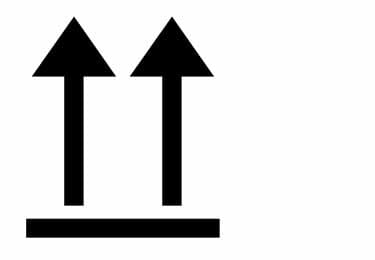
A horizontal line with two vertical arrows pointing upwards indicates the orientation of the packaging during storage and transit. It can sometimes be used with the text “This Way Up”.
Do not open with knife

A symbol of a knife with a cross, either next to it or striking through it, details that the packaging should not be opened with a knife (as this may damage the contents within).
Do not place near magnets

Certain electronics or specialist equipment can be sensitive to magnetic forces. If this is the case, use this symbol of a magnet to instruct people not to place the box near magnets.
Do not drop
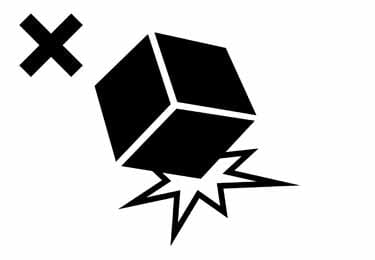
Whilst this should be pretty obvious (surely it is best not to try to drop anything), this symbol can give people handling your packaging another indication that they should take care when handling.
Handling instruction symbols
Symbols on packaging provide safety and handling instructions
Whilst there is some overlap in terms of protecting the contents of the packaging, the following packaging symbols are also commonly used to illustrate safe handling, stacking and storage practices.
As with the above symbols, various combinations can be used as appropriate (although bear in mind that too many icons can serve to confuse the user or cause vital information to be overlooked).
Stacking height

Two bars with a number above indicate the maximum height to which the boxes can be safely stacked. The number can therefore vary depending on the nature of the packaging and its contents.
Load weight/height

A more detailed version of the above packaging symbol, a tower of boxes with a number in the middle, can indicate the safe stacking height or, in some cases, the weight. The number in the middle box can indicate stacking height or provide a weight.
Do not stack

A symbol of packaging boxes stacked next to a cross (or sometimes with the cross over the main illustration) tells the users not to stack the packaging.
Contents weight
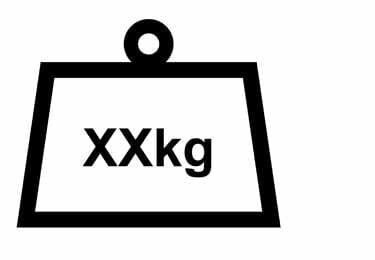
A weight symbol indicates the weight of the packaging (including its contents). This allows users to decide how best to handle the packaging, as well as determine which boxes (if there are different variants) they need. The number within the symbol can be changed as appropriate.
Two-person lift
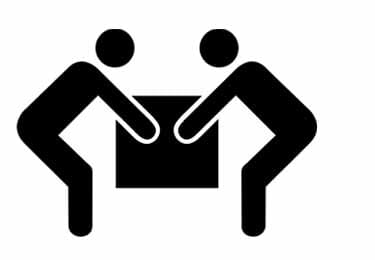
Rather than showing a weight symbol, two people lifting a box can indicate that it is too heavy for a single person to carry.
Heavy

Similar to the above, this packaging symbol cautions people to be careful when lifting the box or packaging due to its heavy content and/or large size.
Use pallet truck

This symbol of a sack/pallet truck with boxes stacked on it indicates to the user that this form of assistance should be used to move multiple items at once.
Do not use sack truck

Conversely, this symbol indicates that a sack/pallet truck should not be used to transport this packaging and its contents (as doing so may damage the items within).
Do not use forklift

Finally, an image of a forklift alongside a cross or with a strike-through indicates that the packaging or contents are not suitable for movement using a forklift.
Miscellaneous packaging symbols
Other frequently used cardboard packaging symbols
Besides the corrugated transit packaging symbols for handling, safety, and protection, several other, less frequently used icons can still be found on corrugated packaging.
Please refer to the chart below for additional details or to download the specific symbols.
Caution (general)
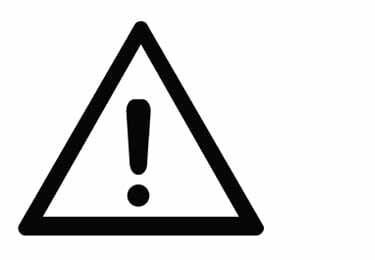
The exclamation mark within a triangle is a symbol for general caution. This can be applied to many different scenarios, so it is often accompanied by explanatory text.
ESD safe logo
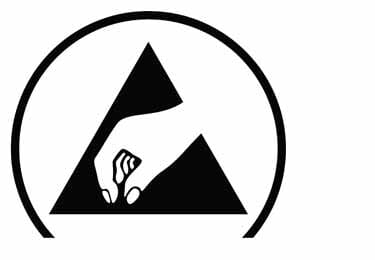
This symbol indicates that the packaging is ESD safe, in that it protects the contents from electrostatic discharge. It is commonly found on anti-static packaging such as the Corstat range.
Food safe
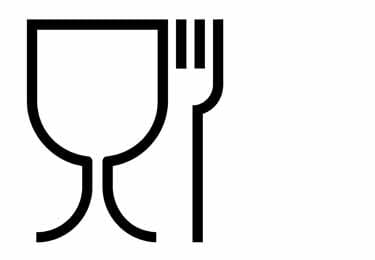
A fork next to a glass is the international symbol of “food safe” material. It effectively means that the material used in the product or packaging is safe for food contact and will not leach any hazardous substances.
Kitemark

Resembling a kite, the “kitemark” logo is a trademark of the British Standards Institute, indicating that the product within the packaging meets specific standards (ascertained through ongoing testing). Please note you will require permission to use this symbol.
CE mark
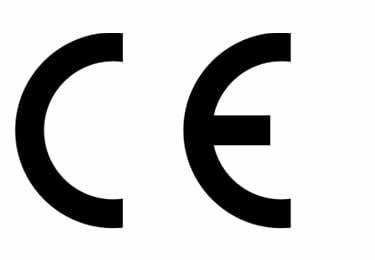
The CE logo indicates that the product within the packaging meets the applicable requirements of specific EC directives (this only applies to certain product types). Please note that you will require permission to use this symbol.
Recycling symbols
Recycling symbols commonly used on corrugated cardboard packaging
The following recycling symbols are widely used on corrugated packaging.
For a more comprehensive list covering all of the icons that may be used to indicate recyclability (and recycled content), please see our guide to recycling symbols on packaging.
Mobius loop
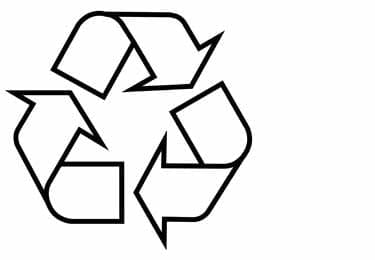
Perhaps the most commonly used and recognised of the recycling symbols, the Mobius loop indicates that the packaging or products are recyclable. It can also be displayed with a percentage symbol in the middle of the icon.
FSC®
FSC® is an acronym for the Forest Stewardship Council, with the logo identifying packaging products that contain wood from well-managed forests. Please note that you will require permission/accreditation to use this symbol.
Tidyman

The tidy man symbol, produced by the “Keep Britain Tidy” campaign, doesn’t specifically relate to recycling, but serves as a reminder to dispose of packaging correctly (e.g., not littering).
Corrugated recycles

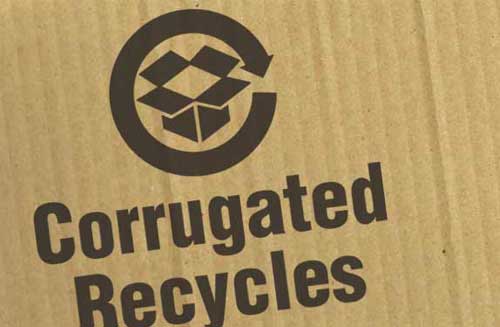
The Corrugated Recycles logo is a free-to-use symbol developed by the Corrugated Case Association, highlighting that cardboard packaging can be recycled.
Summary
Using packaging symbols on your boxes
The above list is not exhaustive, and you may find that you require specialist or specific packaging symbols for your own application.
However, the majority of businesses that use corrugated transit packaging, utilising the correct number and types of logos from the above options, can have a surprisingly significant impact on how well their packaging performs within their supply chain or delivery networks.
Should you have any questions regarding any of the symbols included (or not included) here, please do not hesitate to contact our team of packaging experts.
About the author

Matt joined GWP in 2012 as Marketing Manager, and is now involved with sustainability and the promotion of Macfarlane’s manufacturing businesses.
Important note
Due to the sensitive and regulated nature of the topic this guide addresses (labelling and measures) we have taken extra steps to ensure its accuracy and reliability. You can find out more in our content policy.
All information is, to the best of our knowledge, accurate and correct at the time of publication. Please also note that, as all scenarios vary, not all information contained in this guide may apply to your specific application. There may also be specific regulations or laws, not covered within this particular guide, that apply. Please view the list of labelling and measures regulations for further details.
Share this article
Further reading

Products in this guide




Get in touch
For full details on how GWP treats your data, please view this Privacy Policy. Your info is not shared with any third party.
Related guides
10 packaging artwork mistakes (and how to avoid them)
Litho vs. digital print for packaging
Printed cardboard packaging – your options
Printed eCommerce packaging ideas
Recycling symbols on packaging (+ free downloads)
Corrugated board grades explained: types of cardboard
PAP 20 logo – what is it, and should you be using it on your packaging?
Packaging Waste Regulations quick guide (2025)
Branded and printed sample cases – 9 visually striking ideas