










Selecting a sample case
A guide to choosing the right presentation case
So you’ve decided that you and your sales team can benefit from using custom sample cases for your products in your presentations and sales pitches.
You can see that they will protect your samples, organise them, and help your meetings run more smoothly.
But, how will they show your customers you are a professional company that cares about your product? And how will they empower you and your sales team?
You can even see the potential for using them to psychologically influence your target customers.
Basically, you know all the benefits of using product sample cases.

So, you’re about to take the plunge, but wait, there are so many different options. Different styles and brands, materials, colours, even different types of handles, and this is before considering branding your cases.
How do you choose what type of sample case to use?
In this guide, we aim to set out your main case options, allowing you to make an informed decision on the best option for your specific market, products, and customers.
Contents
Defining custom and stock cases
Stock vs custom sample cases
The first point to consider is whether to use stock or off-the-shelf cases or a fully custom sample case.
But what exactly is the difference?
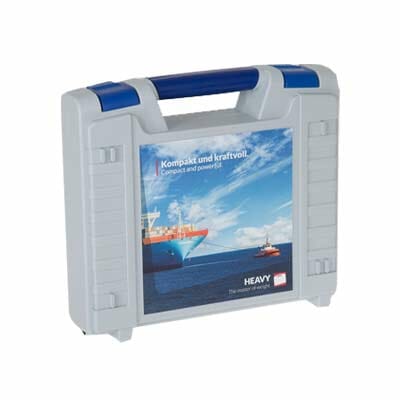
Stock, or standard sample cases, are manufactured in a range of specific sizes and colours, usually from a moulded plastic such as polypropylene.
There are a number of manufacturers producing cases of this type, offering a wide range of options. Popular manufacturers and brands available include Hofbauer, WAG, Shell Case, and Rose Plastic, amongst others.
The alternative is a custom-built case. As the name suggests, these cases are designed and built by a specialist manufacturer to your exact size and specifications.
Although they tend to utilise a range of standard parts, there are still many options to customise the appearance and, if required, the level of protection afforded to your samples.
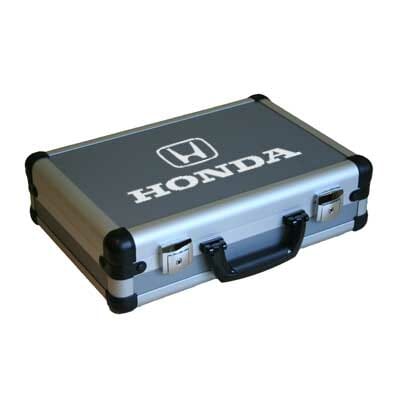
Two of the main types of custom sample cases available are the N Case and Smart Case range.
Common case options
The hidden benefits of product sample cases
Regardless of whether you opt for stock or bespoke sample cases, there are several elements common to both.
The most common, and arguably important, is incorporating custom foam inserts. These not only organise and protect your samples but can also help to improve the visual appearance of the case.
Both custom and stock presentation cases can have foam inserts designed that are a perfect fit for the case.

It’s also possible to add branding to the exterior of the cases in a number of ways, regardless of which type of case you choose to use. You can find more details on that here.
The million-dollar question, however, is which case is right for your business? Which one will be a great fit for your products, will impress your clients and, ultimately, aid your sales efforts?
Well, without further ado, here are the main reasons you would choose a custom case over a standalone one, or vice versa.
Custom sample cases
Reasons to use custom sample cases
There are five commonly cited reasons to choose a custom sample case. These are as follows:
- If you need a custom size to avoid large gaps or condensing samples, in your case.
- You have a particularly large item(s) that need to be presented.
- You require your sample cases to be especially durable.
- You are looking for very high-end aesthetics.
- You can’t find a stock case that truly reflects your brand identity, for example, colour.
So are custom cases the right choice for me?
As detailed above, perhaps the key benefit of a custom sample case is its size flexibility.
This can be important if your range is either quite large or quite small and does not fit well in a standard-sized case. This can lead to excessive empty space or to cramming your samples into space that’s too small.
Both of these situations can compromise the visual impact and usability of your case.
The same principle also applies if you have quite large sample products. Quite often, it can be difficult to find an off-the-shelf case that comfortably accommodates these types of items.
Due to the lightweight nature of plastic presentation cases, a custom case is typically more durable and longer-lasting. This can be useful depending on the types of environment the case will be used in, or how carefully it will be handled.

However, the counterpoint is that the upfront cost, including design and specialist manufacturing, will be higher. You must consider the lifetime cost before assuming one option will be cheaper than the other.
Finally, it can be argued that custom presentation cases offer a more luxurious finish.
Whilst this is very much down to personal taste, the results from specifying custom sample cases can be particularly eye-catching. You also have greater control over features such as handles, catches, and even the colour of the cases themselves.
Are there any downsides to custom cases?
Custom cases will generally come with a higher upfront cost, simply due to the design time involved and the nature of their manufacture. Although standard components can be used, a skilled production operative will still need to build the cases, a problem that stock options do not face.
The nature of the case design and manufacturing process also means that custom cases can have longer lead times.
Finally, the construction of custom sample cases also makes them usually heavier. Whilst this makes it more durable when combined with a heavy set of samples, it can make the case unwieldy.
Stock sample cases
Reasons to utilise stock presentation cases
There are generally four reasons that you would choose to use standard or off-the-shelf presentation cases. These are:
- Budget: Stock cases are generally cheaper than custom cases.
- Time pressures: Standard cases are usually available from stock, so they have shorter lead times.
- Weight is an issue: Stock cases are significantly lighter, making them easier to handle.
- You prefer the appearance of plastic cases: This is particularly common in manufacturing industries.
How to see if you should use standard cases
There are two key drivers behind the decision to use standard presentation cases: budget and lead times.
As a general rule of thumb, off-the-shelf cases are more cost-effective than custom-built options. This is because there is no design time to account for or specialist manufacturing involved. They are simply purchased from a stock range.
The counterargument is that, as they have a shorter lifespan, they will need to be replaced more often. As such, you really need to work out how well the cases will be looked after, how they will be handled, and then you can ascertain a likely “lifetime cost”.

Another benefit of bypassing the design and manufacturing stage is that the cases are available on much shorter lead times. So if you are desperate to get cases organised for a specific show or event, stock options are quicker to source.
A less often considered benefit is that, due to their plastic construction, stock sample cases are lighter than bespoke alternatives. This may be useful if your samples are heavy or if the cases need to be handled a lot.
Finally, many people prefer the appearance of this type of case. There is a wide range of styles, colours, and options available, meaning it is usually easy to match your brand identity.
When stock cases might not be suitable
Basically, the main disadvantage of stock sales demo cases is the fewer options for customisation.
You are generally limited to a standard range of colours unless ordering exceptionally high volumes, and many argue that the overall aesthetics are lower quality than those of custom cases. This is a very subjective topic, though.
Also, being limited to specific sizes can mean you need to select specific samples to display, as an entire range may not fit. For smaller collections of samples, the case is left with a large amount of empty space that negatively impacts the appearance.
Finally, the durability of this type of plastic case, including its various components such as hinges and catches, is generally lower. This may not be a problem if the case is well looked after, and is also mitigated by the lower cost of purchase and replacement.
Summary
Deciding on stock vs custom sample cases
Whilst this guide can’t tell you which type of sample case is right for your specific requirements, it has hopefully laid out the considerations that you must take into account.
It may be the case that there is one overriding factor that influences your decision. Maybe there are a number of required features, making the decision more complicated.
Regardless of the route you decide to take, it’s important to bear one thing in mind.
Whether you are planning on using stock or custom presentation cases, either option will have a significant, tangible impact on your success when presenting your samples in sales meetings.
Share this article
Further reading


About the author

Initially joining GWP Protective back in 2004, Richard’s vast, specialist knowledge and experience mean he now heads up the business as General Manager.
Products in this guide




Get in touch
For full details on how GWP treats your data, please view this Privacy Policy. Your info is not shared with any third party.