






Aid the productivity of your manufacturing operation
Surprising ways in which plastic tote containers can help your business
Whilst reusable packaging won’t be right for every business, and for many, single-trip packaging will be the better option, it can offer significant benefits when used in the correct application and industry.
However, setting up and operationalising a reusable packaging loop requires planning, in addition to initially winning support from key members of your business, customers, and suppliers.
In this guide, we’ll provide you with answers to securing funding for your reusable packaging system and to implementing and managing your returnable packaging setup.

Contents
Is reusable packaging the right choice?
Why should you be considering reusable packaging?
Before detailing the key areas to focus on and the tasks to tackle, briefly summarise the reasons you should consider switching to returnable packaging.
Arguably, the biggest reason is one of cost.
Take a standard reusable container that costs £15. With a regular cardboard box costing approximately £1.50, this results in an outlay 10 times greater. However, after 10 trips (and overlooking cleaning and maintenance costs), the reusable option has broken even. At 50 trips, the price per trip is down to 30 pence.
After 200 trips, the cost is just seven pence, a massive saving on the £1.50 cost of an equivalent cardboard box!
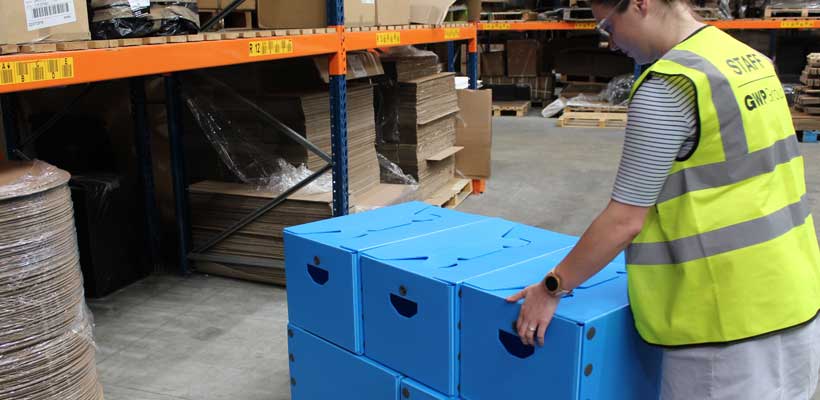
Another key reason, however, is to limit your business’s environmental impact. The resources (and costs) required to maintain reusable containers are considerably lower than those for recycling high volumes of cardboard cartons.
Add increased protection for specific applications, greater strength, and so on, and there is a compelling argument for switching.
That said, there are applications, markets, and industries where a single trip is still the best option. For a complete, unbiased appraisal of single- and multi-trip packaging, take a look at our guide.
Proposal: How to get approval for returnable packaging
17 reasons to switch to returnable transit packaging
The first part of this guide covers how to analyse whether you could benefit from reusable packaging, what you need to put in place, and how to secure approval for the scheme from the relevant stakeholders in your business.
It covers:
- Winning support and the initial review.
- Internal teams and coordinators.
- Any external support.
- Collating data on packaging use and disposal (Waste Regulations).
- Creating KPIs.
- Producing an action plan.
So, without further ado, let’s detail the steps required to get a reusable packaging system agreed and supported by your business.
Management buy-in and initial review
The first stage of any project to try and implement reusable packaging is to gain the buy-in and support of senior management, directors, or relevant stakeholders within your business.
Whilst this will need to include key stakeholders, getting employees and colleagues who will be tasked with running the system once setup is also critical to help avoid friction and objections. Keeping all parties informed will foster a sense of inclusion and shared targets.

To secure this support, it is wise to conduct an initial review. This will be used to obtain the evidence required to support your business case.
This could, and should, include identifying opportunities, current issues with excessive waste and any areas of your packaging that could see potential savings.
Wherever possible, try to put realistic estimates of these alongside your findings (including figures on potential cost savings), which can help win over even the most cynical of management.
Whether to appoint a coordinator or project team
As mentioned above, getting the right people on board from the beginning can make a huge difference.
Staff members who should be involved will likely include, but are not limited to:
- Buyers and procurement teams.
- Logistics managers and teams.
- Manufacturing coordinators.
- Environmental and waste management officers.
- Marketing and product development staff.
It is also a good idea at this stage to identify and appoint a manager for the overall project (if not yourself) to champion it and drive it to completion.

External support
Another key element of successfully moving to a reusable packaging setup is to involve key individuals and organisations outside your business.
This could include your existing packaging supplier or, if they do not offer multi-trip packaging containers, carefully selecting suppliers who can provide expert input (and who can design and manufacture the new containers or packaging you will need).
It is also essential to speak with your customers. If they do not buy into the idea, or there are genuine insurmountable obstacles to switching to reusable packaging, then this must be identified early in the process.
Collating data on packaging use and disposal
The Extended Producer Responsibility (EPR) legislation requires businesses to report on how much packaging they use and dispose of.
This includes accurate information on the weight of packaging that you handle, including imported packaging if you are the end user.
Knowing the knock-on effects to your responsibilities under the Packaging Waste Regulations will save a lot of work later in the process, as well as providing further ammunition in terms of reducing PRN/PERN costs that you will need to purchase.
Creating Key Performance Indicators (KPIs)
At this stage, you should be able to come up with a list of key performance indicators (KPIs), effectively your targets and goals, that you can use to review the success of your reusable packaging implementation.
This can cover anything from overall spend, to cost per trip, amount of waste produced per item or shipment and so on.
Setting targets and benchmarks will help show progress and highlight any other areas that still need improvement.

Producing an action plan
The final step is to produce a detailed plan of action for your returnable packaging implementation.
This should contain details on who is responsible for which elements, timelines for specific actions, and working on the KPIs highlighted in the previous stage.
It is also essential to specify how and when you will review your progress and performance against the set KPIs (e.g., every 6 months). This will allow you to continue moving the project forward and ensure any potential obstacles are addressed.
Set up: How to implement your chosen system and products
Considerations for successful implementation and management
Although the above section may seem like a lot of work, this can pale into insignificance when compared to the actual implementation itself. However, having a detailed plan, timelines, and KPIs can lay the groundwork for success.
Whilst the use of reusable packaging can result in significant cost savings, there are steps to take to maximise them.
Poor implementation can lead to inefficiencies and to failing to reap all the potential environmental benefits.

As such, the second part of this guide covers the eight key points to address when implementing your returnable transit packaging and managing it ongoingly.
- Management of the scheme.
- Type of reusable packaging to use.
- Volume of units required.
- Transport and logistics considerations.
- Managing loss.
- Cleaning and refurbishment.
- Review progress.
Management of the scheme
Depending on the scale of your reusable packaging system, it may be wise to appoint a dedicated manager with no other duties.
As this obviously incurs additional costs (which will be offset over time by the reduced packaging costs), you may need to consider who in your business can take responsibility for this (e.g., logistics or manufacturing managers).
Type of returnable containers
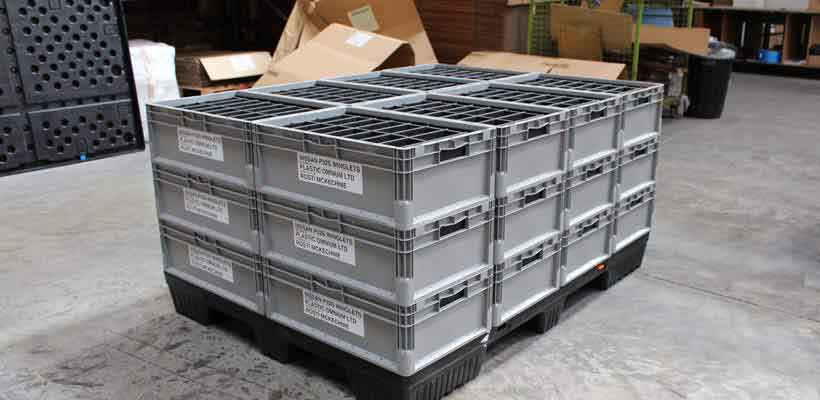
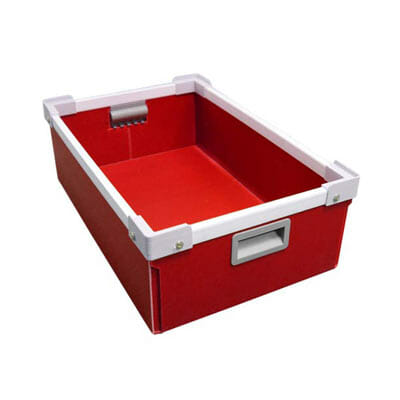
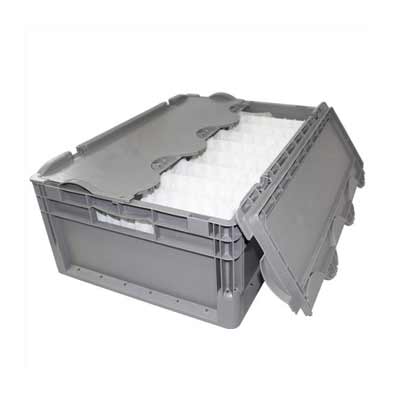
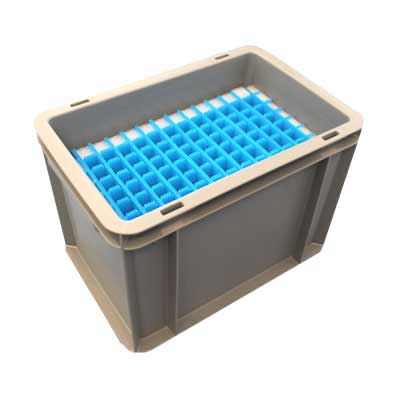
There is a surprisingly extensive range of different multi-trip packaging options. This includes everything from Correx tote containers, through to moulded Euro containers and the new Rapitainer solution.
You will need to analyse the specific properties you require from these (e.g., folding flat, stacking strength, branding, etc.) before deciding on the most suitable option for your application.
GWP will be more than happy to provide advice on this.
Quantity required
Once you have decided on the type of returnable packaging containers you will use, you also need to determine the correct number you will require.
This is particularly important as there will be containers located at your site(s), at your customer’s premises, and in transit, at any one time. The delays between sending and returning containers, and the overall volume of product you ship, will play a role in making this decision.
Transport and logistics
The ideal scenario would be for your reusable packaging to be collected as you deliver new products, with the empty totes or containers then being back-hauled.
This can become more difficult if multiple deliveries are made by the exact vehicle, if your customers are not timely in returning the containers (or having them ready for collection), or if you operate complicated arrangements or provide irregular consignments to different sites.
A solution such as Rapitainer, which folds flat after use, can help resolve a number of these issues.
Scale of the scheme
Generally speaking, the larger the scheme, the more efficient and cost-effective it will be.
This is because you will pay a lower price for bulk purchasing your containers, will generally have more influence over the prompt return of the containers, and can more readily absorb issues such as a small number of customers not returning the reusable packaging promptly.
In fact, having more locations, journeys, and containers makes it easier to maintain stock levels and smooth out variations in demand, as well as peaks and troughs.
Saying that, small-scale schemes can still work well (and are definitely worth exploring) if you have a limited number of suppliers and customers, and even more so if these are concentrated geographically.

Tracking and managing loss
It is almost inevitable that some “leakage” of your inventory may occur.
Containers may become mislaid, damaged, or accidentally disposed of, which is why it is essential to track, as far as possible, the location of all your containers at any given time.
Another helpful idea is to draw up an agreement, or even a formal contract, outlining your responsibilities and your customer. How you approach this will obviously depend on the strength of the relationship between the relevant parties.
Cleaning and refurbishment
Once your reusable packaging loop is up and running, you will also need to establish processes for checking, cleaning, and refurbishing the containers periodically.
This can help protect your investment and ensure that protection and performance levels are maintained during transit.
Review your progress
As mentioned in the KPI section, it is essential to continually review the progress and effectiveness of your reusable packaging system, even after it is implemented and running.
Doing so can help drive further efficiencies, iron out potential issues before they become too serious, and effectively maximise the benefits for you, your customers, and your suppliers.
Summary
Discover how material handling totes can help your business
If you have decided that implementing reusable packaging at your business could have a positive impact on your costs and environmental performance, this guide should give you a good starting point for the key areas you should focus on.
However, if you require any help or advice with getting your own project off the ground, GWP would be more than happy to assist.
Our team of packaging experts have nearly 30 years of experience in designing, manufacturing, and supplying successful reusable packaging solutions. Please don’t hesitate to get in touch today.
Share this article
Further reading

About the author

Ian was Managing Director of GWP Conductive and GWP Correx until his retirement in 2023. He still shares his knowledge and expertise in a consultative role.
Products in this guide


Get in touch
For full details on how GWP treats your data, please view this Privacy Policy. Your info is not shared with any third party.
Related guides
17 reasons to switch to returnable packaging
Analysis: Single trip vs returnable packaging
Returnable packaging containers – your options
Manufacturing productivity (11 tips to improve your performance)
8 overlooked benefits of material handling totes and containers
Temporary picking bins – 12 ways they help with seasonal demand
7 important advantages of automotive returnable packaging
What is Correx®? Everything you could need to know