









Updates to the UK Packaging Waste Regulations
What is the Extended Producer Responsibility (EPR) legislation?
If your business uses, handles, imports, or generates packaging, then you’re likely to be affected by the packaging Extended Producer Responsibility (EPR) legislation.
This is a beginner’s guide that provides all the information you need to determine whether Extended Producer Responsibility affects your business, as well as the steps you need to take to remain compliant.
But what exactly is Extended Producer Responsibility?
Back in 2023, the Extended Producer Responsibility legislation for packaging was introduced as part of the Producer Responsibility Obligations (Packaging and Packaging Waste) Regulations to make organisations significantly more responsible for the recovery and recycling costs of the packaging that they place on the market.
The variable fees introduced as part of the legislation also aim to encourage the use of more easily recycled materials. Businesses that are affected may need to report packaging use, pay fees, and purchase Packaging Waste Recovery Notes (PRNs).
Contents
Why has EPR been introduced?
The current packaging waste regulations
The original packaging waste regulations, built around the Producer Responsibility Obligations, were introduced in 1997. These regulations aimed to increase recycling rates.
Over the 25 years the regulations have been in place, overall packaging recycling rates have increased to approximately 75.2%.
Corrugated cardboard and paper-based packaging rates are even better, at around 86.4%.
The UK Packaging Waste Regulations have enabled national recycling targets to be met or exceeded since the scheme’s introduction through shifting the financial burden of packaging waste directly onto producers rather than local authorities and taxpayers.

Previously, producers were required to purchase a set number of Packaging Waste Recovery Notes (PRNs) to demonstrate that they were contributing financially to packaging waste management. However, the funds generated this way covered only around 7% of the total management costs for post-consumer packaging waste in the UK.
Then, as consumers, businesses, and the government also became increasingly aware of the environmental damage caused by packaging waste, Extended Producer Responsibility was introduced to bridge the gap.
The impact of plastic waste came under particular scrutiny, and the Plastic Packaging Tax was introduced as the first step towards addressing this issue specifically.
What is the aim of Extended Producer Responsibility?
Ultimately, the Extended Producer Responsibility legislation aims to foster a more circular economy and promote increased recycling.
By making individual businesses responsible for the total net cost of managing packaging waste – rather than taxpayers – producers will have a greater financial incentive to opt for recyclable materials and sustainable designs.
The introduction of modulated fees through the Recycling Assessment Methodology (RAM) also aims to further encourage businesses to move away from difficult-to-recycle packaging. Modulated fees effectively involve charging increased sums for plastics and other harder-to-recycle packaging materials.
Definitions of packaging affected
Packaging definitions
The definition of packaging, as provided by the GOV.UK website is as follows:
“Packaging is any material that is used to cover or protect goods that are sold to consumers. It makes handling and delivering goods easier and safer. It includes anything that is designed to be filled at the point of sale, such as a coffee cup“.
“Packaging also makes goods look appealing, and it may display a company’s logo or brand. ‘Goods’ could include raw materials or processed items”.
Household packaging
There is an essential distinction between what the Extended Producer Responsibility legislation classifies as household packaging and what is deemed as industrial or transit packaging.
Household packaging is defined as packaging collected from homes through local recycling systems. It encompasses primary, secondary, and tertiary packaging that ultimately becomes household waste.
- Primary packaging: The packaging that directly contains the product, e.g., a bottle or box.
- Secondary packaging: The packaging that is used to group individual products, e.g., cartons or shrink wrap.
- Tertiary packaging: The packaging that is used for transport, e.g., pallets or stretch film.

Material types
The key packaging material categories that are included under these regulations are as follows:
- Paper and cardboard – Shipping boxes, labels, paper bags, and cardboard wraps.
- Plastic – Bottles, pots, tubs, trays, films, crisp packets, and pouch packaging.
- Glass – Jars and bottles.
- Metal – Aluminium cans, foil, steel aerosols, and paint tins.
- Wood – Wooden pallets and crates.
- Fibre-based composites – Drink cartons and drink pouches.
- Other – Cork, jute, hessian, and ceramics.
Qualifying packaging activities
Determining whether your business is affected
Besides the type of packaging within the scope of the Extended Producer Responsibility, determining whether your business is financially liable (or needs to report its packaging use) depends on several defined activities.
If your business undertakes any of the following activities, you at least need to record the packaging you use.
You supply goods to the UK market under your own brand
If your business sells products or goods in packaging that is labelled with your brand, you are likely to fall within the scope of EPR.
Branding includes any logo, trademark, or distinctive mark.
You may also need to act if you pay another business to produce goods you sell under your brand name. Similarly, if a third party packs goods sold under your brand name, places branded goods on the market for you, or imports goods for you, you might need to take action.
A useful example is a food product manufacturer.
If you produce food products under your own name and the packaging includes your branding, you are responsible for that packaging under EPR. You remain liable even if a third party, such as a supermarket, sells your products.
However, if you produce goods that a supermarket sells under its own brand name, it would be responsible for any packaging.
You place goods into packaging that is supplied unbranded
You might still be eligible for EPR if you place goods or products into unbranded packaging supplied to your business. Responsibility applies whether you are packaging the goods for your own business or a third party.
You import products that are already in packaging
If your business or organisation imports products from outside the UK that use primary, secondary, or any packaging used for their transportation, you are likely within the scope of the legislation.
Packaging EPR applies even if you discard the packaging before selling the goods.
However, if you are importing goods on behalf of a third party, they are responsible for reporting any costs incurred through EPR. In this case, you do not need to take any action.
You own an online marketplace
The government defines online marketplaces as websites that allow non-UK businesses to sell goods to UK consumers. You will be responsible for the packaging generated by these activities if you own such a marketplace.
However, if you run a website that only sells goods from UK businesses or organisations, this is not a marketplace and is therefore outside the scope of EPR.
You hire or loan out reusable packaging
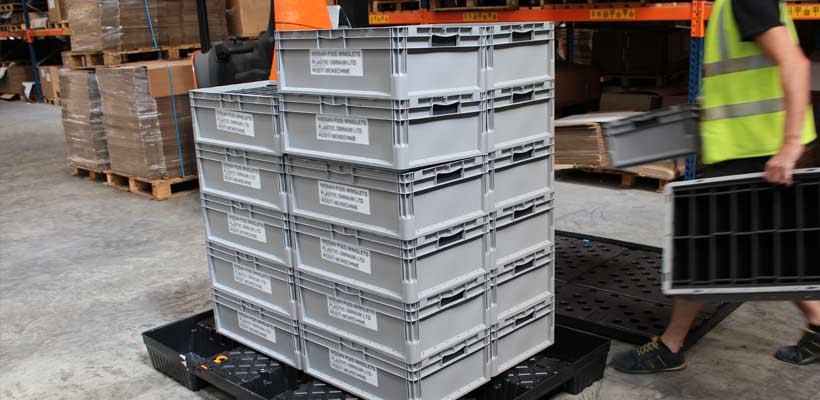
The UK government states that any business that hires or loans out reusable packaging must record data on the first time it’s placed on the market. This type of packaging includes wooden pallets, euro containers, and handling totes.
You supply empty packaging
If you are a packaging manufacturer that effectively supplies empty packaging, you will likely be required to take action under the EPR legislation.
In this case, EPR primarily affects the packaging you supply to businesses that the legislation defines as small.
Conversely, your business may use packaging but have a turnover of less than £2 million or handle less than 50 tonnes of packaging each year. In this case, the new regulations make your packaging supplier liable.
Who is responsible?
Which businesses are responsible and how?
Not every business will be subject to the Extended Producer Responsibility legislation, but the thresholds are set low enough that many companies across manufacturing, retail, and distribution will be affected.
If you meet all the criteria set out below, you will need to comply with this legislation.
Small producers
Suppose your business turnover is between £1 and £2 million and is responsible for handling or supplying over 25 tonnes of packaging (either empty or containing goods) into the UK market. In that case, EPR classifies you as a small business.
Equally, if your annual turnover exceeds £1 million, and you are responsible for between 25 and 50 tonnes of packaging, you are also considered a small business.
If either of these scenarios applies to you, you will only need to report your packaging usage as part of the small producer obligations.
This part of the legislation is also commonly referred to as the De Minimis rule. Your packaging supplier will be responsible for purchasing PRNs and paying any other charges or fees.
Find a full breakdown of who is responsible under the EPR legislation here.
Large producers
If your business has an annual turnover of more than £2 million, and you handle or supply more than 50 tonnes of empty packaging or packaged goods within the UK, then you are deemed a large business.
If you qualify as a large business, you will be liable for purchasing PRNs and other fees and costs that are associated with packaging recovery and recycling as part of EPR.
Please note that the weight of packaging supplied or handled applies to the calendar year (January to December) rather than the financial or tax years.
Find the full breakdown of who is responsible under the EPR legislation here.
Parent companies, groups, and subsidiaries
There are various options for registering and complying with EPR if you are part of a parent company, a group of businesses, or a subsidiary.
Firstly, you could register as a whole group, and in this scenario, the parent company would be responsible for compliance with packaging requirements for all subsidiaries within the group.
Secondly, subsidiaries can register as individual entities. Any subsidiaries that exceed the turnover and packaging use (tonnage) thresholds are responsible for their own compliance and reporting.
Finally, a parent company can register for some of the subsidiary companies. This option may be helpful when some, but not all, subsidiaries meet the compliance requirements.
Some of your subsidiaries may not meet the turnover tonnage thresholds individually, but do collectively. If so, you must register as a parent company for these and be responsible for their compliance with EPR.
What do you need to do?
Extended Producer Responsibility requirements
Depending on whether you are a small or large organisation, you might need to take four or five steps. These potentially include the following:
Requirements for small producers
Packaging users deemed as small producers must record their data and report empty packaging and packaged goods.
You must supply your packaging data for the previous year 1 April of the following year, and you may also need to report nation data.
You must also pay an annual fee to the environmental regulator.
If you fail to do any of this or miss the specified deadlines, you may be subject to fines or penalty charges.
Requirements for large producers
The steps you should take as a large producer are similar to those for small producers, with some differences.
You must also record data regarding your packaging use for the previous year, including nation data. However, large producers must report their data every six months (e.g., data for January to June is due by 1 October, and data from July to December due by 1 April the following year). Missing these deadlines can result in penalty charges.
The increased reporting also means you must create an account and register your business.
Besides these requirements, you must also pay a fee to the environmental regulator alongside buying PRNs or PERNs to meet your recycling obligations.
Crucially, you must also pay administrative and waste management fees (often referred to as EPR fees) for any packaging you handle or supply that is eventually collected from households or street bins by local authorities.
Reporting requirements
Data declarations under the legislation
Whether you are a large or small producer, Extended Producer Responsibility will require more detailed reporting of your packaging use. For larger producers, this reporting also shifts from annual to biannual.
The increased detail in the figures you must report aims to enable the introduction of modulated fees. Modulated fees target packaging that is more difficult to recycle, resulting in higher waste management fees.

Information required for reporting
There are seven main criteria that businesses are required to report on their packaging under Extended Producer Responsibility. These are:
- What is the function of the packaging? Effectively, for what purpose is the packaging being used? Figures here cover primary, secondary, and tertiary packaging applications.
- The format that the packaging takes, for example, is it a box, bottle, bag, etc?
- What waste stream will the packaging enter at the end of its life? Will the packaging be for household, business, or industrial use?
- The different packaging components that make up a single packaging item, for example, the lid, label, and bottle for a drink, would have all three elements reported separately. This reporting is similar to how the Plastic Packaging Tax operates.
- Are there any elements known as recycling “disruptors”? Materials such as metal, UV inks, varnishes or carbon black colouring can inhibit or prevent recycling.
- Whether the packaging contains recycling “enablers” that allow improved sorting and recycling.
- Finally, the colour of the material used.
Further details on your EPR reporting requirements can be found here.
Nation data
The other information that large and small producers might need to report on is nation data.
This information is applicable in the UK, where your packaging has been sold, hired, loaned, or disposed of.
If you are within the scope of EPR, then you have a requirement to report nation data if:
- Your business supplies either filled or empty packaging directly to consumers in the UK.
- You supply empty packaging to UK organisations that are not legally obligated under the EPR regulations.
- Your business hires or loans out reusable packaging.
- You own an online marketplace allowing other businesses to sell either empty packaging or packaged goods to UK consumers.
- You import packaging into the UK that your business discards without selling or exporting it.
As with other reporting, if you need to declare nation data, you must do so by 1 April each year for the previous year.

What fees are associated with EPR?
What costs might your business incur?
At the time of writing, the base fees that are associated with the Extended Producer Responsibility are set as follows:
- Paper and card: £196 per tonne
- Plastic: £423 per tonne
- Glass: £192 per tonne
- Aluminium: £266 per tonne
- Steel £259 per tonne
- Wood: £280 per tonne
- Fibre-based composite: £461 per tonne
- Other: £259 per tonne
These charges are to be in addition to charges related to the Plastic Packaging Tax and the upcoming Deposit Return Scheme (DRS). The DRS has currently been delayed until October 2027.
Find out more about the fees that are involved in Extended Producer Responsibility here.
Modulated fees
The additional data reported as part of the scheme will enable the introduction of modulated fees based on the supplied packaging data.
This approach will result in lower fees and packaging costs for easier-to-recycle packaging. Conversely, higher charges will apply for packaging that is more difficult to recycle.
Packaging fee modulation aims to encourage packaging producers and users to switch to materials and designs that offer greater recyclability. In effect, it will reward businesses that use sustainable packaging or take steps to improve.
Fee modulation is based on the results of the Recycling Assessment Methodology (RAM), which categorises each material component of your packaging according to its recyclability.
Packaging Waste Recovery Notes (PRNs/PERNs)
The previous Packaging Waste Recovery Notes (PRNs) and Packaging Waste Export Recovery Notes (PERNs) system will remain in its current format under Extended Producer Responsibility. The system will continue to cover all forms of packaging.
PRNs and PERNs are certificates that prove that packaging waste has been recycled. Businesses subject to existing UK Packaging Waste Regulations and the Extended Producer Responsibility must purchase these materials from accredited reprocessors (e.g., those that perform physical recycling) to fulfil their own recycling responsibilities.
Compliance schemes
Management of your responsibilities
If all of this seems like a daunting task, you can outsource your compliance to a third-party provider.
Compliance schemes, such as those provided by Valpak, would involve them calculating your obligations, registering your business, paying any fees, and purchasing the required number of PRNs on your behalf.
If you pursue this option, working with a provider on the compliance scheme public register is essential.
Additional costs are involved with such schemes. However, they can significantly reduce administrative tasks and ensure your business avoids penalties for incorrect or late submissions.
Alternatively, if you are a GWP customer, you can request data on your packaging usage to help you complete your reporting obligations independently.
Summary
Taking steps to comply with Extended Producer Responsibility
If your business handles or sells packaged goods, you will likely need to report your usage under this legislation. However, whether you need to take further action and are liable for increased financial obligation depends on several factors.
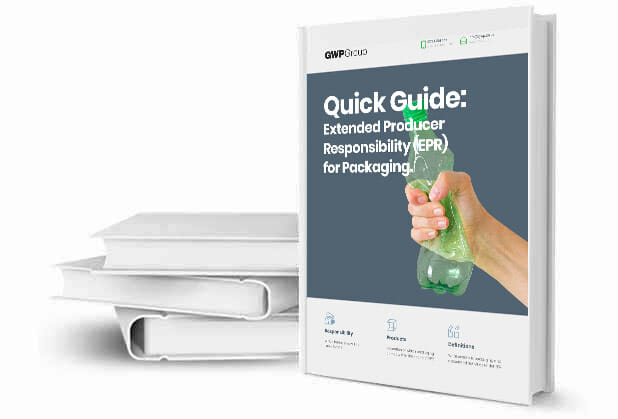
If you are still unsure about your business’s requirements under the Extended Producer Responsibility legislation, you can download a handy guide to determine what to do.
Alternatively, you can find further information on the government website.
About the author

David is responsible for driving improvements in sustainability at GWP and the wider Macfarlane Group, having previously performed a similar role for Zero Waste Scotland.
Important note
Due to the sensitive and regulated nature of the topic this guide addresses (eco-friendly packaging) we have taken extra steps to ensure its accuracy and reliability. You can find out more in our content policy.
All information is, to the best of our knowledge, accurate and correct at the time of publication. Please also note that, as all scenarios vary, not all information contained in this guide may apply to your specific application. There may also be specific regulations or laws, not covered within this particular guide, that apply. Please view the list of sustainable packaging regulations for further details.
Share this article
Further reading


Featured products





Get in touch
For full details on how GWP treats your data, please view this Privacy Policy. Your info is not shared with any third party.
Related guides
Extended Producer Responsibility (EPR) fees explained
EPR reporting – what packaging data does the new scheme require?
Packaging Waste Regulations quick guide (2023 update)
A beginners guide to the Plastic Packaging Tax
Recycling symbols on packaging – explanation and free icon downloads
Recycling Assessment Methodology: What it means for your business
5 ways to avoid or reduce the impact of the tax on plastic packaging