






Improving your efficiency
How to optimise your pallet loads
Regardless of your industry sector, if you ship large volumes of products on pallets, these essential pallet optimisation tips can significantly improve your operations.
Optimising how your pallets are loaded includes configuring products, using correctly sized packaging, and choosing a suitable stacking pattern. It is also vital to plan your pallet requirements, choose the right size, and educate your staff on how to load them correctly.
In this guide, we’ll briefly outline well-optimised pallet packaging and offer six tips to maximise your efficiency.
Contents
Introduction
The crucial role of pallets in packaging and shipping
Pallets play an essential role in your transit packaging; they allow the safe shipping of both large items and multiple smaller items in a single shipment. Pallets allow for easy manoeuvrability of loads by forklift, usually fit in most warehouse racking, and are accepted by virtually all transport providers.
Pallets also provide the base for widely used pallet boxes and complex composite packaging designs. They are crucial for export packaging and are often fully integrated into wooden shipping crates.
In addition to the standard Euro and UK pallet sizes, custom-size pallets can be used for particularly large or difficult-to-ship products.

Benefits of pallet optimisation
Despite the benefits of pallets and pallet packaging, optimising your use of pallets can yield additional benefits.
Optimised pallets and loads can help reduce transport costs and CO2 emissions by eliminating the shipping of empty space. Optimising your pallet boxes and packaging can also reduce costs by reducing the requirement for secondary packaging.
Improvements in staff efficiency, safety, and productivity are all realistic goals, alongside providing suitable protection for items during shipping.
Six essential pallet optimisation tips
How do you optimise your pallet loads and packaging?
So, how do you go about achieving these benefits? The six key points to consider and action when optimising how you load and pack your pallets are:
- Thoroughly assess and plan your requirements.
- Select the most appropriate pallet size.
- Optimise the packaging you use with your pallets.
- Spend time configuring pallet loads and stacking patterns.
- Ensure you meet customer and transport requirements.
- Educate your packing staff on how to load your pallets correctly.

Assess and plan
Assessing the requirements of your pallets and packaging
Before you can begin to optimise pallet loads, you must understand the varying requirements.
For example, how many products do you need to ship each day, each week, or each month? What is the average number per shipment? How many products do your customers typically order at a time?
Beyond this, you should consider other factors, such as how the goods are to be transported (by road, air, or sea). The likelihood of damage to your products is another vital factor you should fully understand.
Similarly, you should also account for secondary factors such as safety and customer expectations.
Select the correct pallet
Choosing the most suitable pallet size
Once you have the required information on the type and number of products you ship, choosing the correct pallet size is the easiest way to optimise your shipments.
Selecting between a standard UK pallet (1200x1000mm), a Euro pallet (1200x800mm), or even a custom pallet size can significantly impact your transport efficiency.
You should consider the weight your chosen pallet can take, alongside the exact specification. For example, block pallets are suitable for a variety of applications. In contrast, solid deck pallets (with a complete covering rather than slats on top) are preferable if your load requires additional protection.
You may even find that reusable plastic pallets are your best option if you have an efficient returnable supply chain setup.
Optimise your packaging
Maximising the efficiency of your pallets
The next step is to optimise your packaging to maximise the efficiency of your pallet loads. However, a more successful approach is to consider both pallet size and pallet-optimised boxes simultaneously.
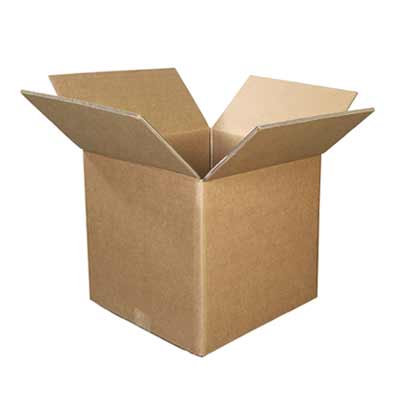
The size of the boxes you load onto your pallet can significantly impact transport efficiency (you may be paying to ship empty space if they are not well-optimised).
Boxes that are too large can also cause increased damage during transit.
Finally, choosing the right material for your packaging is also essential, depending on your products and expected handling conditions. Your pallet packaging should protect from pressure, shock, vibration, and other environmental factors (such as moisture and inclement weather).
So, besides size, choosing an appropriate material such as double-wall corrugated, triple-wall, or even timber for export packaging applications is essential.

Configure your pallets
Figure out appropriate stacking patterns
How your packing team loads products onto your pallets plays a significant role in how well-optimised they are.
Besides the obvious space efficiency, the correct stacking pattern can significantly improve safety.
A pallet using an appropriate stacking pattern – either aligned or staggered – is more stable, provides optimal strength, and, as a result, offers the best protection during transit.
Additional packaging, such as slip sheets between layers of products and strapping or stretch wrap, can further improve the performance of your packaging.
Educate your staff
Ensure packing teams know how to load pallets correctly
A vital part of optimising your pallets and packing is ensuring your packing team knows how to load them correctly.
Even with the optimal pallet boxes in the ideal size and strength, if your teams load them poorly or incorrectly, much of your optimisation effort will be in vain.
Initial training, ongoing checks, education and even visual guides can also help to ensure that staff pack pallets in the best way.

Other requirements
Ensure you meet transport and customer requirements
Finally, you should also take a step back and consider any requirements of your transport provider and customers.
What may not seem the most efficient way of loading pallets to you may be what your customers need, for example, to meet specific requirements or to be compatible with automated equipment.
Similarly, an efficient pallet load may be too high for your transport providers, who will charge you more than if you packed your pallets differently.
Summary
Pallet optimisation tips to maximise efficiency
Optimising your pallets and packaging should be an ongoing process, but undertaking this process and using the tips in this guide can have a surprisingly significant impact on the success of your operations.
However, if you are having difficulties improving your packaging, sourcing custom pallets, or just knowing where to start, GWP can help.
Our team of packaging experts has a track record in optimising businesses’ packaging so that it not only provides the required levels of transit protection, but is also genuinely cost-effective.
About the author

Stuart boasts over 20 years of top-level experience as a packaging design engineer, in roles at Insit Moulded Packaging (IMP) and Macfarlane.
Important note
Due to the regulated nature of the topic this guide addresses (export packaging) we have taken extra steps to ensure its accuracy and reliability. You can find out more in our content policy.
All information is, to the best of our knowledge, accurate and correct at the time of publication. Please also note that, as all scenarios vary, not all information contained in this guide may apply to your specific application. There may also be specific regulations or laws, not covered within this particular guide, that apply. Please view the list of export packaging regulations for further details.
Share this article
Further reading


Products in this guide






Get in touch
For full details on how GWP treats your data, please view this Privacy Policy. Your info is not shared with any third party.
Related guides
Pallet packaging – 7 advantages of well-optimised boxes
UK pallet sizes – what are they, and do they affect your packaging?
Should you consider using bespoke pallets at your business?
7 advantages of using wooden export crates (and 5 disadvantages)
What is ISPM 15? A comprehensive guide
Export packaging guide – 7 considerations for international shipping
Shipping cases: 5 options for safe transit of your goods
Equipment damage: 8 causes of products breaking in transit
7 tips for shipping high value equipment, tools, and parts
Export crating – why it’s essential for international shipping