










How to protect your equipment
A guide to selecting the best protective case with foam
Equipment cases can be the one thing preventing your business costs from potentially running into thousands of pounds.
They could be the one thing protecting your extremely expensive equipment during handling and transportation. They could be the one thing preventing project delays, wasted time on site, and unproductive staff – all caused by important equipment arriving damaged, faulty, or even missing.
Yet their importance is frequently neglected or, worse, overlooked altogether.
Even if you know and understand their importance, choosing an equipment case can be difficult.
The protective case market as a whole encompasses a wide range of cases, from lightweight plastic and aluminium to custom-built flight cases and even wooden crates.
Even if you are looking at waterproof equipment cases, as you really should if you require the highest level of protection, making the right choice can be a daunting one.
Contents
Waterproof case features
Common features of waterproof equipment cases
So why should you choose waterproof cases if you are looking to protect high-value, fragile or business-critical tools, equipment, or products?
Well, there are actually several very good reasons.
Firstly, this type of moulded plastic case is exceptionally strong and durable. They can absorb impacts and general mishandling, will not burst open if crushed (even if they were to be run over by a vehicle), can withstand being dropped from a great height, and are, all in all, the most indestructible cases available today.
As a result, most waterproof equipment cases come with a manufacturer’s lifetime guarantee; if you manage to break it, it will be repaired or replaced free of charge.

Besides this, waterproof cases can be easily enhanced with foam inserts. Using foam such as Plastazote inside a moulded plastic equipment case can eliminate movement of the case’s contents and also allow calculated levels of cushioning protection to be engineered into the case.
The combination of exceptionally tough outer cases and foam cushioning can completely eliminate damage caused through handling or transit.
It doesn’t stop there, though.
Most cases will offer easy-to-use handles, pressure-relief valves (so the case doesn’t open during pressure changes), wheels for added ease of handling, and secure clasps that can usually be locked.
But what about protection from water, as the name suggests? This, on its own, can be a very significant consideration.
What are IP ratings?
What level of protection do they provide?
There are, in fact, various levels of protection from water, moisture, and dust, with different cases offering different levels of protection.
This level of protection is often referred to as the IP (Ingress Protection) rating of the case. Communicated as two digits, this gives a detailed understanding of just how waterproof your case will be.
The first digit establishes the level of protection against the intrusion of foreign bodies. At the low end of the scale, this can refer to hands and fingers, but it can also extend to cover protection against fine dust particles.
The second digit covers protection against water, liquid, or other moisture ingress. Again, the low end of the scale covers gently dropping water, whilst the highest level of protection concerns complete immersion of the case underwater.

Therefore, an IP rating of 67 would provide complete protection from both dust and water, even when submerged.
The importance of this is that for your equipment cases, high-value or specialist tools, parts, or components, especially those containing electronics, can be severely damaged by moisture.
You can find out more in our comprehensive guide on IP ratings here.
Choosing a waterproof case
Selecting the best option for your business
So knowing that most, if not all, waterproof equipment cases would provide a similar set of features, and all offer high levels of impact protection, surely the choice boils down to which offers the highest IP rating?
Well, not necessarily.
Unfortunately (or fortunately, depending on how you look at it), most waterproof cases have an IP rating of 67 or 68.
Whilst this means that practically any waterproof equipment case will provide your items with the required protection, is there any way to decide which one would be best for your application?
The short answer here is, yes.
However, before highlighting the reasons to choose one protector case over another, it’s worth detailing the brands and ranges available to you.
Brands and ranges of waterproof cases available
Although there are, in fact, an even wider range of cases than those listed here, the major brands and options that are widely used for the safe transit of high-value or fragile equipment are as follows:
- Peli™ Cases
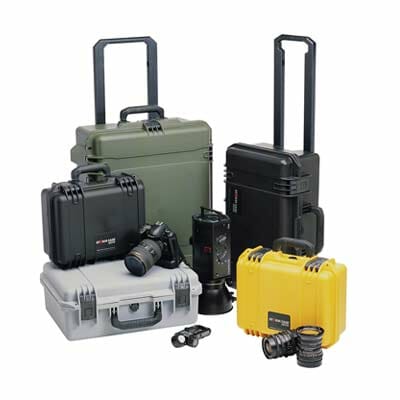
- Peli Storm Cases™
- SKB Cases
- Explorer Cases
- Nanuk Cases
- Hardigg™ Roto Mould Cases
- EXOCases™
Most popular cases
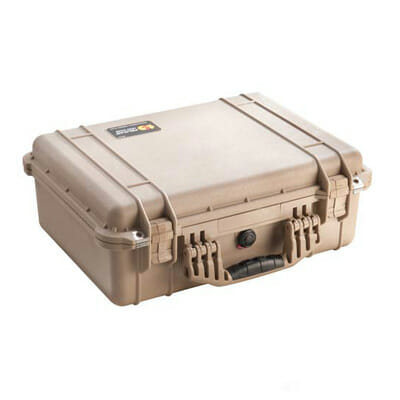
Peli™ waterproof cases
Peli™ Protector cases are the original waterproof equipment cases, having been first launched in 1967.
Whilst this in itself isn’t a benefit, it does mean that the brand is well-trusted, including by many armed forces around the world, due to its tried-and-tested performance.
This reliability, coupled with a wide range of sizes and colours developed over the years, makes it a versatile option. The fact that it has been available for such a long time also means the cases have been extensively tested and given an IP rating of 67.

However, being the leading brand is reflected in the price point, which is considerably higher than that of some lesser-known case ranges.
Other minor criticisms include an appearance that many find a little dated, a clasp design prone to freezing shut and becoming brittle at very low temperatures, and difficulty branding the exterior.
However, if you are looking for protection and budget isn’t an issue, Peli™ cases are a great choice.
Best all-round case
Peli Storm Case™
A close relative of Peli™ cases, being manufactured by the same company, Peli Storm Case™ have been positioned as a slightly more premium option.
However, whilst that is reflected in the appearance, which does not appear much more “high end”, the levels of protection are not compromised at all.
Being IP67-rated and having undergone extensive military-specification testing, you can be certain that your equipment or tools will be protected by this range of cases.
It also has a number of clever features, such as automatic pressure relief valves (Peli™ and many other cases require manual adjustment), as well as much-improved clasps, handles, and wheels on larger cases.

But what are the downsides?
As a relatively new case, the range of sizes and colours is much more limited than that of its older sibling. The price points again reflect both the Peli™ brand and the positioning of this particular range.
Saying that, if you’re looking for excellent protective performance and also the best possible appearance, then a Peli Storm Case™ is the equipment case for you.
Best for price and performance
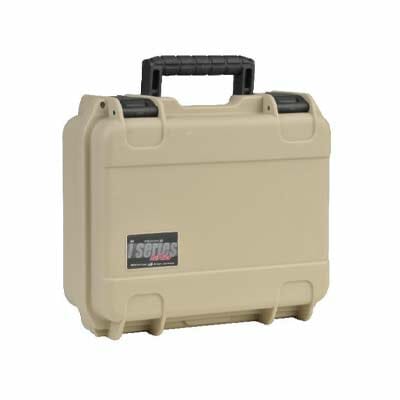
SKB Case
A relative newcomer to the market, the SKB case has quickly been making up ground on the competition in terms of performance, matching Peli™ cases on IP rating and military testing specifications, and offering a wide array of sizes and styles.
There are, in fact, a number of different ranges within the SKB catalogue – 3i and 3R being the two most notable – as well as a huge range of specialist cases designed specifically for musical instruments, drones, and other equipment.
With pricing also more competitive than Peli™ cases, there is little to say that is negative about the cases. However, some people complain that the catches, whilst easy to operate, deteriorate more rapidly than other options on the market. The size range is also slightly more limited than that of some other options.
Best for cost
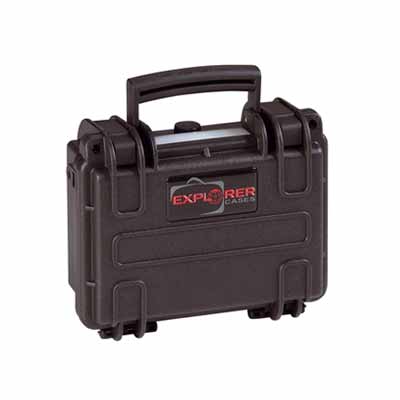
Explorer cases
Once marketed for their Italian heritage, Explorer cases are actually among the most cost-effective options on the market today.
Very similar in appearance and features to Peli™, these European-designed and manufactured cases are widely used by the armed forces across the EU.
Although the appearance is appealing, the range is somewhat limited by a lack of sizes and colours compared with some other case options.
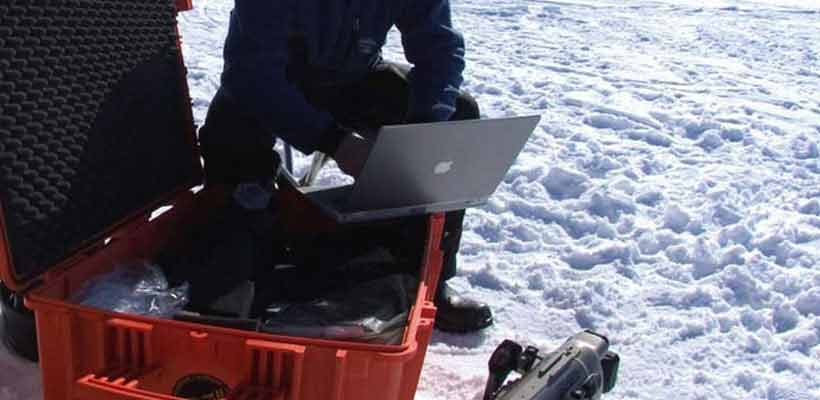
The catches can also suffer a similar fate to those on the Peli™ cases, in that they can freeze shut and snap, but overall, the performance is excellent and backed by a lifetime guarantee and military-level test certification.
As a result, this is the case to choose if costs are tight or you are working towards a specific budget.
Best for protection
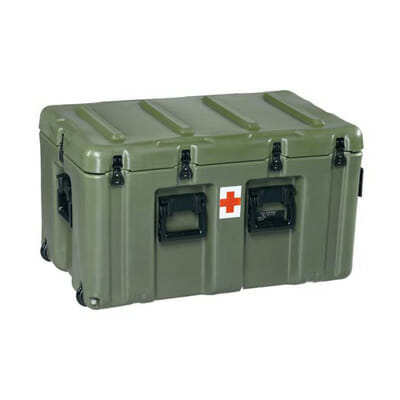
Hardigg™ Roto Mould Case
Hardigg™ Roto Mould Cases are, without a doubt, the toughest cases available on the market today.
Other benefits include an extensive range of sizes, more than most of the other options listed here combined, plus the ability to “cut and shut” cases to achieve an even greater range of dimensions.
Besides this, they have an integrated stacking feature, are available in specific rack-mount configurations, and have been extensively tested by the military.

But what are the drawbacks?
Well, the cases are very heavy and bulky, making them difficult to handle and potentially incurring significant transit costs. They are also very expensive compared with the other options here, which reflects the level of protection they offer.
So whilst they may not be ideal for field staff if portability is an issue, they will offer your equipment the highest level of protection possible.
Best for features
Nanuk cases
Another new entrant to the already crowded market, Nanuk cases offer all of the performance expected of cases in this segment, at a mid-range price point.
However, whilst there are cheaper and more expensive cases, the main benefit these cases offer is the number of built-in features, which often cost extra on other cases.
For example, every Nanuk case comes with an integrated bezel which allows for easy mounting of electronics without needing to drill the case’s exterior – as with Peli™ and Storm, for example. In addition to saving on the cost of purchasing the bezel, this retains the full IP67 rating.
Similarly, an integrated lid stay is included – again, an extra, or not even available, in other cases.
Saying that, as the range is relatively new, there is a limited number of sizes and colours, although this may still grow as the case gains popularity. Some people are also reluctant to trust their high-value equipment to a case that is, relatively speaking, still rather untested compared with some of its rivals, although it has shown good results in a range of military tests, etc.
All in all, a good case that, if you are looking for a lot of features as standard, or definitely require mounting of electronics, is a viable option.
Best for specific sizes and shipping
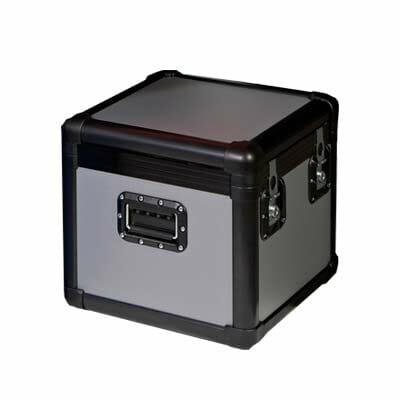
EXOCases™
EXOCase™ actually offers a lower IP rating than all of the other cases detailed here, although it does still provide protection to IP*6.
So, whilst it’s offering performance that approaches, but doesn’t quite reach, the level of moulded waterproof cases, it offers one major point of difference and advantage: it can be easily manufactured to virtually any size.
Effectively being a waterproof flight case, EXOCase™ offers a great compromise between a moulded plastic case and a custom-built case.
The benefit is that, rather than selecting the nearest size, which is slightly too large, a case of the perfect size can be sourced. This reduces costs by using less material for foam inserts and enables more efficient, cost-effective, yet safe shipping.

The other main benefit is that the cases can be very easily modified in terms of colours, handle types, adding wheels and even rack housing, whilst it’s possible to replace components, for example, corners or panels, if they become damaged.
The main disadvantages, however, are a relatively high weight, which can make handling difficult, and the lack of a full IP67/68 rating. It also offers slightly less impact protection.
Saying that this protective case offers a great choice, combining the flexibility with the performance of a moulded case.
Summary
Choosing the best equipment case for your business
As you can see, whilst the majority of waterproof equipment cases offer similar levels of performance with the arguable exception of Roto Moulded and EXOCase™ options, there are specific reasons why you would choose one particular option over another.
If you are still unsure of the best option for your application, however, or would like to discuss how this could fit within your specific budget, then please contact a member of our team of packaging experts at GWP Protective, who will be happy to help.
Please note: All trademarks are registered and/or unregistered trademarks of Peli Products, S.L.U., its parent, subsidiaries, and/or affiliates.
Share this article
Further reading


About the author

Initially joining GWP Protective back in 2004, Richard’s vast, specialist knowledge and experience mean he now heads up the business as General Manager.
Products in this guide


Get in touch
For full details on how GWP treats your data, please view this Privacy Policy. Your info is not shared with any third party.
Related guides
Transit cases – how to decide which is right for you
Peli™ vs Storm Case™: A detailed review and analysis of each option
The 6 signs you need protective foam inserts
Shipping cases: 5 options for safe transit of goods
How to enhance your cases with foam inserts
Plastazote® foam – what is it and should you be using it?
Peli Case™ alternatives – 11 Pelican™ style cases to consider