






Commercial and environmental analysis
Is sustainable foam packaging now a viable option?
If your business uses polymer-based foams for shipping or presenting your products, you are increasingly likely to be interested in sustainable foam packaging options.
Several sustainable foam packaging materials are now available. Options include foams like Stratocell R with high levels of recycled content, alongside wood-based foams such as Fibrease® by Stora Enso. Sustainable foam packaging can help reduce plastic pollution and enable easier recycling, but certain materials may compromise performance, appearance, and finishes.
We’ve taken a holistic view of the sustainable foam packaging options that are currently available to your business. At GWP, we have extensive experience in converting these materials (as well as traditional plastic-based foams), allowing us to provide a balanced assessment of the options.
In this guide, we’ve included what sustainability means in the context of packaging, the sustainable foam materials currently available, and applications for sustainable foam packaging.
Contents
Introduction
The challenge of sustainable packaging
Sustainability is one of the biggest challenges facing not only the packaging industry but businesses of all sizes and in virtually all market sectors.
With growing awareness of the harm human activity is causing the planet and climate, more and more consumers demand that brands and businesses provide sustainable products and services. This expectation extends to the packaging that your company uses.
Whilst this has seen the increasing adoption of new materials or a switch to paper-based options like corrugated packaging, one area that has lagged behind until recently is foam packaging.
Foam packaging and sustainability
Sustainable foam packaging has long been a desire of many brands, manufacturers, and packaging buyers.
Traditional foams use virgin plastics in their production and are inherently difficult to recycle. This is particularly true of one of the word offenders, Expanded Polystyrene (EPS, or Styrofoam). Many businesses have long sought to find viable polystyrene alternatives.
The launch of the UK Plastic Packaging Tax, which levies additional charges on plastic packaging with less than 30% recycled content, has also accelerated the need for more eco-friendly options.
In essence, there has been a considerable demand for options that allow businesses to move away from traditional foam packaging materials.
Sustainable foam options
What are the current sustainable foam packaging options?
So, with a growing clamour amongst consumers and businesses, material producers have responded by developing a range of more sustainable foam packaging options.
The sustainable foam packaging options that are currently available are:
- Fibrease® wood foam
- Papira® cellulose foam
- Stratocell R
- Ethafoam HRC
- Ecozote
Fibrease® by Stora Enso
Wood foam packaging
Stora Enso manufactures Fibrease® wood foam using Nordic wood fibres. It is a soft material with memory-foam-like behaviour. In addition to providing cushioning and damping properties, it can also be used for insulation (e.g., in temperature-controlled packaging applications).
Arguably, its most significant advantage is that it is recyclable in kerbside bins alongside the outer corrugated box it is used in. The ease of recycling wood foam packaging is a big plus for consumers and eliminates more difficult-to-recycle materials.

There are a couple of points to consider if looking to switch to Fibrease®, however. Firstly, it may provide less cushioning protection than plastic-based foams. This performance may make it unsuitable for items that are susceptible to damage in transit.
Secondly, it can also generate a small amount of dust over time, which can make it unsuitable for some electronics or parts and components that could be damaged by this.
Overall, however, Fibrease® is arguably the most sustainable foam packaging material that is currently available.
Papira® by Stora Enso
Cellulose foam
Still in development and currently in pilot stages in Sweden (and another product by Stora Enso), Papira® is similar to Fibrease® but with the added benefit of being biodegradable. It uses cellulose fibres, resulting in a lightweight shock-absorbent packaging foam. All raw materials are also from sustainable sources.
As the material is still in its early stages, it is difficult to comment on its strengths and weaknesses. Still, it promises to be another step forward regarding eco-friendly foams.

Stratocell R
Foam with recycled content
Stratocell R is a closed-cell polyethylene foam. This polymer-based (plastic) material contains at least 65% recycled content.
Besides being exempt from the Plastic Packaging Tax, it also provides excellent cushioning protection. This performance makes Stratocell perfect for producing end caps or foam lining to protect electronics, tools, equipment, consumer goods, or any fragile or expensive items.
This high performance also means you can use less material, reducing your pack sizes and, in turn, minimising transport requirements and emissions.
However, the material is still plastic, and whilst polyethylene is recyclable, Stratocell is not currently collected in kerbside recycling boxes. Its perception amongst consumers can also be negative (particularly if they are unaware that it contains recycled content).

Ethafoam HRC/MRC
High and max recycled content
Ethafoam HRC (high recycled content) and MRC (max recycled content) contain at least 65% and 100% recycled content, respectively.
Similar to Stratocell R, it provides excellent performance in transit packaging applications. The sustainability benefits it enables your business to achieve, particularly in terms of material and pack size reduction (minimising emissions) and preventing transit damage, can be significant.
However, the same issues that apply to Stratocell R also apply to Ethafoam HRC/MRC. Namely, it is difficult for consumers to recycle, and many see plastic as inherently unsustainable.

Ecozote
Ecozote recycled Plastazote
Ecozote is effectively recycled Plastazote, containing at least 30% recycled content.
This material is popular for high-performance applications (such as custom foam inserts for protective cases) rather than single-trip packaging.
It is ideal for long-term (e.g., reusable) storage and transport of high-value or fragile tools, products, and equipment. In fact, Ecozote provides the highest level of protection among sustainable foam packaging options. It is even possible to calculate the precise amount of foam required to protect specific products or items of equipment.

The issues associated with other recycled foam packaging – that it is difficult to recycle and has a poor reputation – apply here, too, but less so. As Plastazote is generally used over multiple trips and uses, the reusability minimises its environmental impact.
Ecozote is more expensive than Stratocell or Ethafoam in the short term. Still, over time, it becomes more cost-effective due to its reusability. The only other consideration is that Ecozote is not currently available in the same range of colours and densities/grades as non-recycled Plastazote.
Sustainable foam packaging applications
Opportunities for switching to sustainable foam packaging
So, with more sustainable foam materials available, are there applications where it would make sense for your business to change? And if so, which foam should you use for a specific packaging type?
Presentation and gift box foam
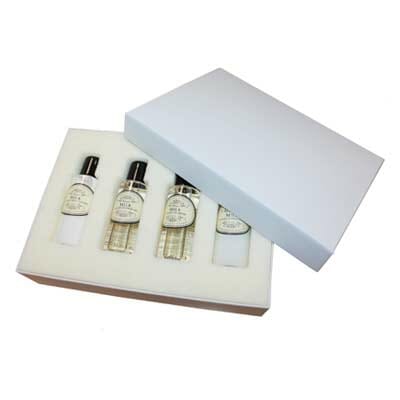
If your brand uses gift packs or presentation boxes for its products – such as cosmetics, homeware, jewellery, or other luxury products – your primary consideration is likely to be aesthetics.
As such, switching to a wood-based foam such as Fibrease® can differentiate you from your competitors.
This benefit is significant when positioning your brand as a natural, organic, or sustainable business.
Besides the ease of recycling (in kerbside collections for cardboard), Fibrease® also offers sufficient longevity to suit value-added packaging that your customers retain for long-term storage.

Sustainable foam packaging for eCommerce
The type of products your business sells online determines the best sustainable foam packaging for them.
For gift-type products (cosmetics, jewellery, etc.), a wood foam insert can be ideal. For products that are not particularly fragile, foam-lined boxes using Fibrease® are also a great option.
If, however, you are shipping higher-value items or those prone to damage, then the recycled foams are a better choice. Stratocell R and Ethafoam HRC are both well-suited for shipping electronics such as phones, TVs, and laptops, as well as fragile items like glass and framed artwork.
Transit and industrial packaging
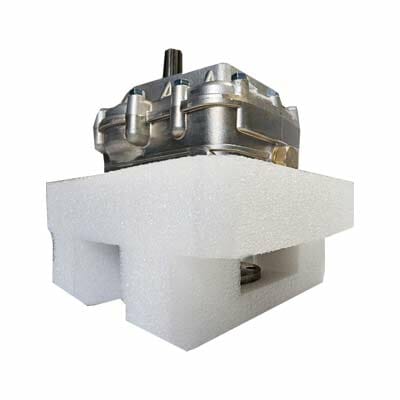
For industrial packaging applications, Stratocell or Ethafoam, even in recycled formats, provide suitable protection for shipping parts, assemblies, and finished products and equipment.
Used to create end caps, oversized cuffs and collars, foam dunnage, or even custom pallet collars, recycled foams can help to improve the sustainability of your transit packaging.

High-performance engineered foam
Suppose you are using a protective case to store or transport your equipment. In that case, Ecozote is your only real sustainable foam option.
Perfect for enhancing waterproof cases, carry cases, aluminium containers, and even sample cases for salespeople, Ecozote provides excellent cushioning protection. It is possible to cut the recesses to the precise shape of your equipment, further aiding protection whilst also making it much easier to retrieve tools or parts.
Summary
Should your business switch to sustainable foam packaging
We have finally reached a point where several viable, sustainable foam packaging materials are available.
However, the new materials can display subtle (and not-so-subtle) differences from their predecessors. As such, it is essential to assess all factors when considering switching to a new foam. Protection, costs, aesthetics, ease of recycling, and how sustainable a material is are all important factors to consider.
With over 30 years of experience in foam conversion, including being at the forefront of new materials available, GWP can provide you with honest and impartial advice on whether switching would make sense for your business and how to handle the process.
If you would like help or advice on switching to sustainable foam packaging, please do not hesitate to get in touch.
Share this article
Further reading

About the author

Ian, as one of the founding Directors of GWP, used his broad knowledge to oversee the new business strategy until his retirement in 2025.
Products in this guide


Get in touch
For full details on how GWP treats your data, please view this Privacy Policy. Your info is not shared with any third party.
Related guides
The 6 tell-tale signs that you need protective foam inserts
Eco-friendly foam packaging – is now the time to switch?
Wood foam packaging – what is it, and should you be using it?
Enhancing your protective cases with foam inserts
Analysis: Is foam packaging bad for the environment?
Polystyrene alternatives: should you be using them?
How to guide: Using cubed foam inserts for cases