






What are recycling codes?
Identifying packaging materials to aid recycling
An understanding of recycling codes can be hugely beneficial. This is particularly true if you are responsible for your business’s packaging, the sustainability of your organisation, or are a consumer struggling to recycle packaging.
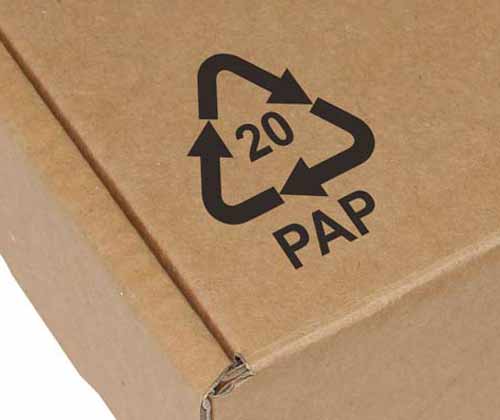
Recycling codes identify the material from which an item is made. Despite common perception, the codes do not indicate whether an item is recyclable. Materials with specific recycling codes include paper, glass, metals, and composites. Codes are displayed in a triangular chasing arrows logo, with a number and accompanying letters.
The European Commission system also includes batteries, and, specifically for plastics, it is common to refer to them as resin identification codes (RICs).
In this guide, we’ll provide an overview of all the recycling codes and symbols, with additional information on materials commonly used in packaging. You can also download the relevant logos in several formats.
Contents
Background and history
The introduction of resin identification codes (RIC)
The Mobius Loop, arguably the most well-known recycling symbol, was created in the early 1970s as part of a competition.
However, by the 1980s, plastics manufacturers had begun using a similar symbol, with a number added inside. The companies used these symbols to denote the type of plastic – a resin identification code (RIC).
Due to the design, many consumers believed it indicated that a product or packaging item was recyclable, but the RIC does not indicate recyclability in any way; it only tells plastic manufacturers what type of plastic the item uses in its manufacture.
Due to this, the extended polymer identification system used in China switched away from the well-known design featuring the chasing arrows, and instead now uses a solid equilateral triangle.

Recycling codes on packaging
As packaging is one of the most frequently handled items by consumers and is most often recycled, recycling codes are usually synonymous with packaging.
However, recycling codes are available for a vast range of different materials (which companies use to manufacture a broad range of products).
Nevertheless, this guide focuses on the recycling codes and symbols most commonly found on packaging.
You can also take a look at our full guide on packaging recycling symbols here.
Correct usage
Important notice on using these symbols
The following symbols and logos are provided for free download on this page in either vector (EPS) or bitmap (JPEG) format for you to use as appropriate.
Please note, however, that it is your responsibility to ensure that any symbols that you use are used correctly.
GWP Group Ltd can accept no responsibility for unlawful or incorrect use of the supplied symbols. GWP accepts no responsibility for any damage or loss resulting from the incorrect use of these symbols on your packaging.
If you have any doubts, contact your packaging or material supplier in the first instance. You can also contact our team of packaging experts.
Resin identification codes for plastics
Codes used for plastics and polymers
The following symbols indicate the type of plastic polymer used on a specific product or packaging. Many organisations commonly refer to these as resin identification codes.
#1 PET(E) – Polyethylene terephthalate

Polyethylene terephthalate is popular in packaging applications for soft drink bottles and food containers. Polyester fibres fall into this category.
#2 PEHD or HDPE – High-density polyethylene
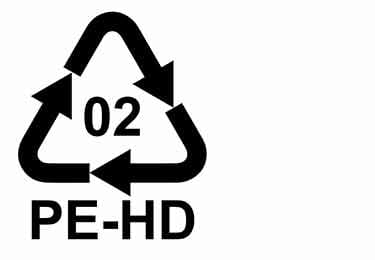
Polyethylene is commonplace in various forms of packaging, including plastic bags, bottle caps, and a wide range of foams.
#3 PVC – Polyvinyl chloride
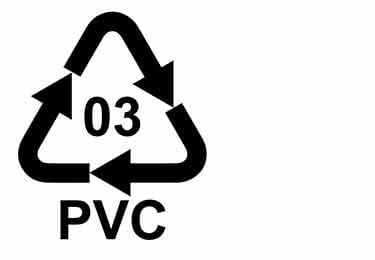
Not commonly used in packaging, polyvinyl chloride is suited to making window frames, pipes, and flooring.
#4 PELD or LDPE – Low-density polyethylene

Manufacturers use LDPE to create packaging, such as Ziploc bags, and consumer products, such as buckets and chopping boards.
#5 PP – Polypropylene
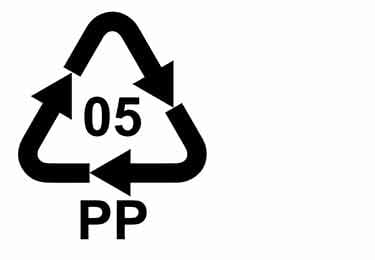
Businesses use polypropylene for items such as car bumpers and DVD cases, but it is also used to manufacture Correx®.
#6 PS – Polystyrene

Polystyrene is well known for its use in protective packaging (often under the brand name Styrofoam).
#7 O (Other) – All other plastics
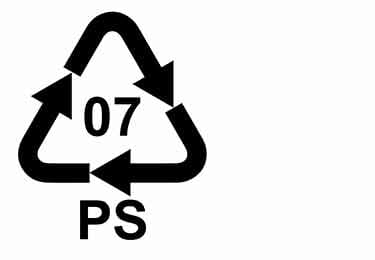
This category covers other plastics, including Polycarbonate (PC), polyamide (PA), styrene acrylonitrile (SAN), acrylic plastics/polyacrylonitrile (PAN) and bioplastics.
ABS – Acrylonitrile butadiene styrene

PA – Polyamide (Nylon)

Paper recycling codes
Recycling codes for paper products
You can find the symbols in the following section on paper-based materials and products, including corrugated cardboard packaging.
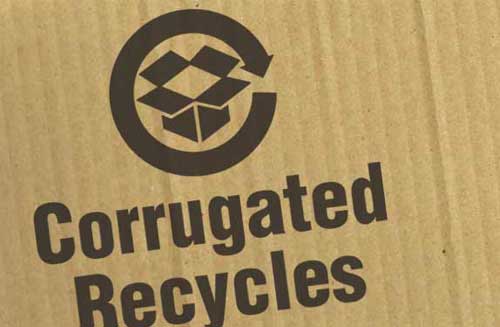
#20 PAP – Corrugated fibreboard (cardboard)
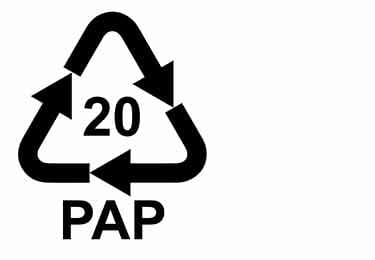
#21 PAP – Non-corrugated fibreboard (paperboard)

The use of non-corrugated fibreboard is commonplace for packaging foods such as cereals. Gift boxes and promotional packs frequently use this material too.
#22 PAP – Paper
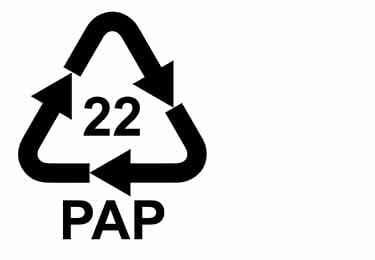
In addition to books, newspapers, and catalogues, packaging applications such as bags and straws use paper-based materials.
Metal recycling codes
Recycling codes used on metal packaging
These recycling codes are those used for metal products such as cans and containers.
#40 FE – Steel

#41 ALU – Aluminium

Aluminium packaging includes soft drink cans, aluminium foil, and single-use food containers. It can also be used for heavy-duty aluminium cases and kit skips.
Biomatter recycling codes
Recycling codes for biomaterials
The European Commission defines recycling codes for biomaterials such as wood, cotton, and other fabrics.
#50 FOR – Wood
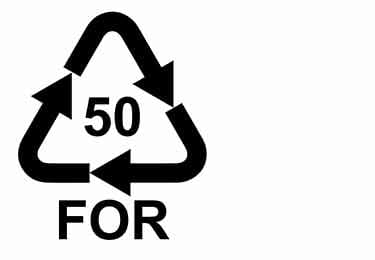
Businesses use wood to create packaging crates and pallets alongside consumer goods such as furniture.
#51 FOR – Cork

#60 COT – Cotton
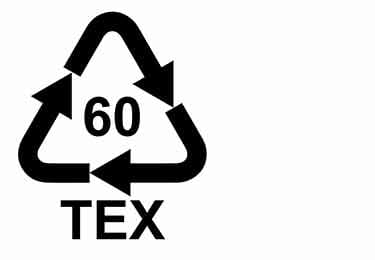
Cotton is occasionally used in packaging to laminate surfaces to prevent scuffing of items, including in reusable stillages.
#61 TEX – Jute

Glass recycling codes
Recycling codes for glass packaging
Glass is a widely used material for packaging (particularly bottles); therefore, the European Commission has created several recycling codes for this material.
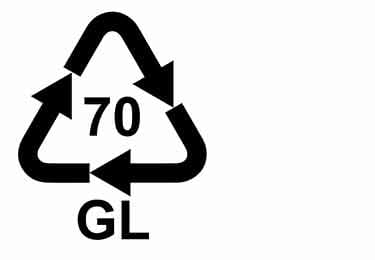
#70 GL – Clear glass
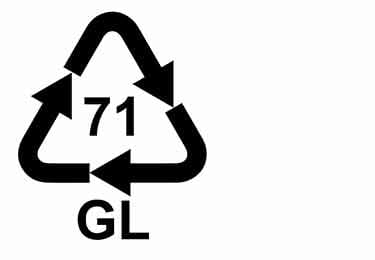
#71 GL – Green glass
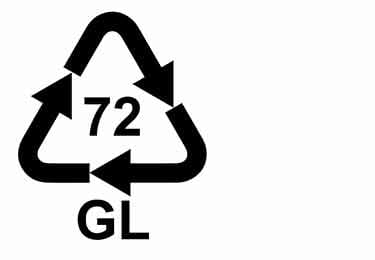
#72 GL – Brown glass
Other types of glass, not typically used in packaging applications, include the following:
- #73 GL – Dark sort glass
- #74 GL – Light sort glass
- #75 GL – Light leaded glass
- #76 GL – Leaded glass
- #77 GL – Copper mixed/Copper-backed glass
- #78 GL – Silver mixed/Silver-backed glass
- #79 GL – Gold mixed/Gold-backed glass
Composite materials
Composite material recycling codes
Composites are effectively combinations of materials (e.g., plastic laminated paper). These can be difficult to recycle, so they have their own recycling codes.
#80 Paper – Paper and miscellaneous metals
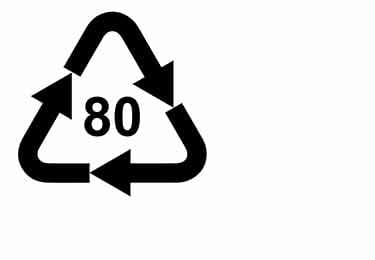
Manufacturers may mix paper with various metals to provide enhanced properties when used for packaging.
#81 PapPet – Paper and plastic
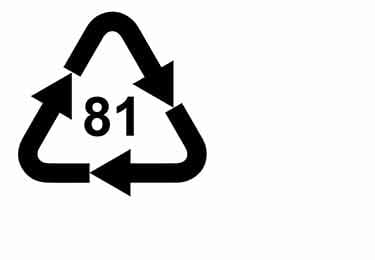
Packaging such as pet food bags, ice cream tubs, and disposable plates uses a paper and plastic composite material.
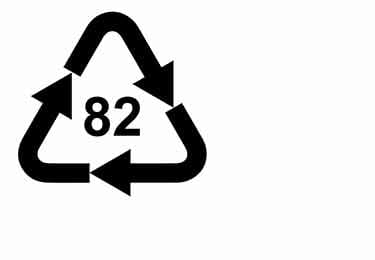
#82 – Paper and fibreboard/aluminium
#84 C/PAP (or PapAI) – Paper and cardboard/plastic/aluminium

Drinks producers use paper combined with plastic and/or aluminium for juice cartons and other liquid storage containers.
#87 CSL (Cardstock laminate) – Biodegradable plastic
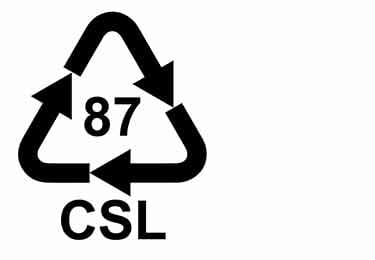
You can find this type of composite material in greeting cards, flyers, brochures, and similar items.
#90 – Plastics/aluminium

Other composite materials, less commonly used for packaging, include the following.
- #83 – Paper and fibreboard/tinplate
- #85 – Paper and fibreboard/plastic/aluminium/tinplate
- #91 – Plastic/tinplate
- #95 – Glass/plastic
- #96 – Glass/aluminium
- #97 – Glass/tinplate
- #98 – Glass/miscellaneous metals
Recycling of batteries
Recycling codes for batteries
Batteries also have their own recycling codes. So although not applicable to packaging, for the sake of completeness, these codes are as follows:
- #8 Lead – Lead-acid battery
- #9 Alkaline – Alkaline battery
- #10 NiCD – Nickel-cadmium battery
- #11 NiMH – Nickel-metal hydride battery
- #13 SO(Z) – Sliver-oxide battery
- #14 CZ – Zinc-carbon battery
Summary
Understanding recycling codes and their use on your packaging
Depending on the market you operate in, the type of products you manufacture or sell, and your location, including the relevant recycling code on your packaging (or products), may be compulsory.
Even if it isn’t, it can help your consumers identify if and how they can recycle your packaging.
However, the range of alternative packaging recycling symbols may be more appropriate and clearer for your customers.
As a GWP customer, you can ask for advice on the best recycling codes, logos, and symbols to include on your packaging. Please contact a packaging expert today for assistance.
About the author

Matt joined GWP in 2012 as Marketing Manager, and is now involved with sustainability and the promotion of Macfarlane’s manufacturing businesses.
Important note
Due to the sensitive and regulated nature of the topic this guide addresses (labelling and measures) we have taken extra steps to ensure its accuracy and reliability. You can find out more in our content policy.
All information is, to the best of our knowledge, accurate and correct at the time of publication. Please also note that, as all scenarios vary, not all information contained in this guide may apply to your specific application. There may also be specific regulations or laws, not covered within this particular guide, that apply. Please view the list of labelling and measures regulations for further details.
Share this article
Further reading
Products in this guide




Get in touch
For full details on how GWP treats your data, please view this Privacy Policy. Your info is not shared with any third party.
Related guides
10 packaging arwork mistakes (and how to avoid them)
What is the packaging extended producer responsibility (EPR)?
PAP 20 logo – what is it, and should you be using it on your packaging?
A beginners guide to the Plastic Packaging Tax
Recycling symbols on packaging (+ free downloads)
Corrugated board grades explained: types of cardboard
Transit packaging symbols (meaning and downloads)