






Introduction
The focus on polystyrene alternatives
If you are among the businesses searching for polystyrene alternatives, you are not alone.
Although most people rightly perceive it as unfriendly to the environment, difficult to recycle and bulky, polystyrene (and in particular expanded polystyrene or EPS) is still used by a large number of companies.
However, with renewed consumer focus on the environment and on brands that can successfully convey their green credentials, there is growing interest in the range of polystyrene alternatives for packaging.
But what are these alternatives? Are they any better for the environment?
In this guide, we’ll explain what exactly expanded polystyrene is, why you should avoid it, foam alternatives, and other eco-friendly packaging options.
Contents
What is polystyrene?
An explanation of polystyrene and EPS
Polystyrene packaging can be solid or foam (expanded). Solid polystyrene packaging includes DVD and CD cases. Expanded polystyrene (EPS) or Styrofoam packaging is commonly used as inserts or void fill to protect items during shipping. Its use is also everyday for food packaging trays.
However, when most people refer to polystyrene packaging, they usually mean expanded polystyrene (EPS) or extruded polystyrene (XPS).
Without getting too technical, polystyrene is manufactured by polymerising styrene, a building-block chemical used to make many products. In its expanded form, suppliers shape or fabricate it using injection moulding processes. This material can be as much as 95% air.
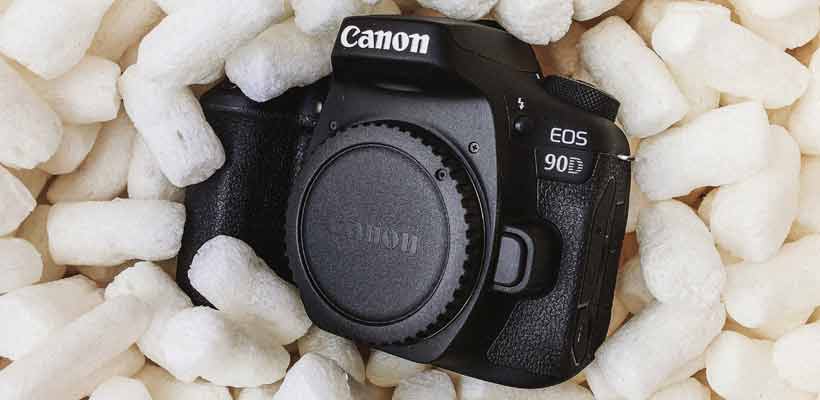
Many businesses frequently use it to protect items during transit, such as TVs, consumer electronics, homewares, and flat-pack furniture.
It is also commonly used to create “loose fill” packaging, such as packing peanuts or packing noodles. It was previously popular for single-use food containers as well. However, many countries/cities, including New York, have banned the use of material for food and single-use applications.
Why is polystyrene so bad?
A lack of recycling infrastructure and investment
Although you can recycle expanded polystyrene, the main reason it is perceived as problematic is the significant barriers to doing so.
For example, UK kerbside recycling programmes do not accept UPS. Due to the material’s low density, it is also uneconomical to collect (e.g., it takes up a lot of space in transit). As a result, there is little investment in processing and recycling expanded polystyrene.
As a result, the material typically ends up in general waste bins, which then enter landfills.

In perhaps the highest-profile incident, New York City, along with over 70 other cities, decided to ban the manufacture, processing, and sale of expanded polystyrene foam (EPS) and polystyrene loose-fill packaging from 1 July 2015. It cited the material as causing environmental harm.
Around 100 tonnes of expanded polystyrene are recycled each year in the UK, with the reclaimed material used to make products such as clothes hangers, toys, and plant pots. Yet the fact that so much ends up in landfills – and the consumer backlash against it – means alternatives are fast growing in popularity.
Five objections to foam inserts
The main reasons consumers and businesses dislike foam packaging are:
- Foam is not environmentally friendly.
- Foam can’t feature branding.
- Foam packaging is expensive.
- Foam is not available in brand colours.
- The material is not suitable for specific products or markets.
However, there are strong arguments against these various issues.
Polystyrene alternatives
Alternatives to expanded polystyrene packaging
So, what are the alternative options to polystyrene packaging? And are any of these really any better for the environment?
Well, there are several alternative materials you can consider when evaluating your protective packaging requirements.
Alternatives to expanded polystyrene packaging include:
- Other polymer-based foams.
- Recycled foam
- Wood/cellulose-based foams.
- Korrvu packaging.
- Corrispring packaging.
- Corrugated fittings.
- Paper void fill.
Standard foam packaging
Enhanced protection during transit/handling
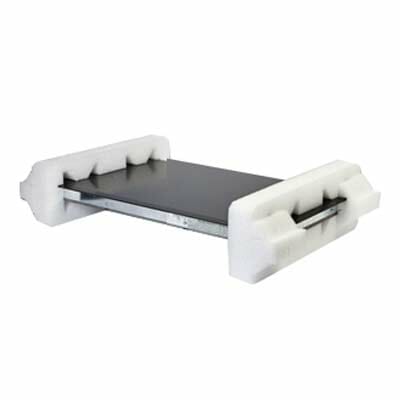
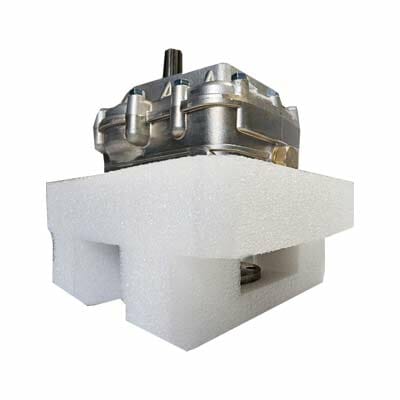
One of the main alternatives to polystyrene is other polymer-based foam packaging. Packaging manufacturers use materials such as Stratocell and Ethafoam to create end caps, pads, blocks, trays, and custom-designed items.
Foam packaging inserts usually provide much higher levels of protection than expanded polystyrene. They are effective across multiple drops, impacts, or mishandling incidents. This performance helps to protect items during transit, in turn minimising the amount of (damaged) goods returned and sent to landfill.
Their properties also allow for the use of much less material than polystyrene and for being considerably less bulky. The result is smaller outer containers, improved transport efficiency, and reduced CO2 emissions.
This benefit means that foam packaging, such as Stratocell and Ethafoam, has a considerably lower environmental impact than polystyrene.
However, these foams, whilst recyclable, suffer from some of the same problems as polystyrene. Most significantly, they are not collected in kerbside schemes and require specialist recycling facilities.

Recycled foam packaging
More environmentally friendly foam options
Using recycled foam can reduce a business’s environmental impact.
Materials such as Stratocell R (recycled) and Ethafoam HRC (high-recycled-content) contain at least 65% recycled plastics. The recycled content does not affect their structure or performance compared with standard foam end caps and packaging, and they can be recycled again at the end of their useful life.
All the benefits of standard foams, therefore, still apply, including minimal material use. They are also not subject to the UK Plastic Packaging Tax (PPT) introduced in April 2022.
However, they also share the same drawbacks, including the difficulty of recycling.
Wood foam packaging
Cellulose-based foam packaging
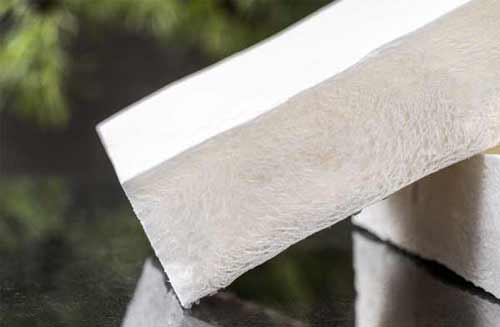
There are now several foams available that are manufactured using natural materials. One of these, Fibrease, is created using cellulose fibres from trees.
This wood foam packaging can provide performance similar to some polymer-based foams, but with the added benefit of being considerably easier to recycle. Consumers can place both the wood foam and the outer cardboard packaging into the kerbside collection for paper.

Korrvu packaging
Innovative alternative to traditional inserts
Korrvu is a type of packaging that, whilst not eliminating plastics, certainly reduces it.
The system works by suspending or retaining the items between two sheets of thin plastic within the outer packaging. The design prevents damage caused by items colliding with the walls of the outer container or with one another.
When the package arrives at the consumer’s home, they can place the entire insert (film and paper elements) in kerbside paper collections. The recycling process similarly separates the plastic component from plastic tape affixed to cardboard boxes.
The other benefit of this form of packaging is that it will again reduce the overall volume of the outer packaging, particularly when compared with polystyrene, which can help improve transit efficiency and emissions. It is also more flexible in the types and sizes of products it can accommodate (with foam end caps being tailored to a single or limited range of items).

Corrispring packaging
Corrugated cardboard cushioning
The success of the Blue Planet series led many businesses to explore ways to significantly reduce, or even eliminate, plastics from their packaging. One way many sought to do this was to move to biodegradable materials.
As a result, a specialist cardboard foam alternative – Corrispring – was developed.
Corrispring is effectively a concertina of corrugated cardboard that acts to absorb shock during mishandling, and whilst the performance levels are less than foam packaging, they can be suitable for various applications. The other downside is the increased bulk of the packs that use them, meaning less efficient use of space during transit.
The key benefit of Corrispring, however, is that the material used in its manufacture is not only biodegradable but also fully and widely recycled (including in kerbside recycling boxes).

Corrugated fittings
Custom designed cradles and inserts
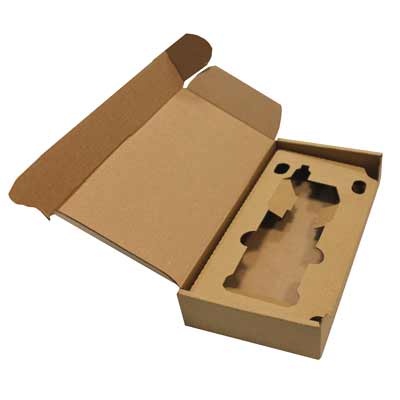
Another option similar to Corrispring is the use of cardboard fittings.
With a lot of transit damage caused by the movement of items within the container, fixing contents within a fitting can significantly minimise instances of this type of damage. This approach is similar to that of Korrvu packaging.
The main advantage, when compared with Korrvu, is that the fittings are entirely made from cardboard, allowing the whole pack to be quickly and easily recycled. The main drawback, however, is that, as the insert is tailored to a specific product, packing staff require a different fitting for each item.
However, for high-volume, single-trip requirements, they can be highly cost-effective and help reduce environmental impact.
Paper void fill
Basic option suited to eCommerce
Many overlook the use of polystyrene for void fill. Often referred to as packing peanuts, noodles, or simple loose fill, expanded polystyrene of this nature is not only bad for the environment but also a nightmare for consumers to dispose of.
An alternative to simply filling excess space within an outer carton is to use paper void fill.
Whilst this provides only moderate transit protection, it does prevent items from moving around and colliding with each other during normal handling operations, making it a suitable option for most standard applications (e.g., if the contents are not particularly valuable, delicate or are already in primary packaging).
It is also readily recycled in standard kerbside recycling.

Summary
Are you still using polystyrene?
If you are, then now is probably the time to make the switch.
As detailed above, there is now a range of much more environmentally friendly polystyrene alternatives, with an option to suit most applications, products, and budgets.
If you require advice on the best solution for your business moving forward or would like a quote on eco-friendly alternative packaging, please speak with one of our packaging experts.
About the author

Ian, as one of the founding Directors of GWP, used his broad knowledge to oversee the new business strategy until his retirement in 2025.
Share this article
Further reading

Products in this guide




Get in touch
For full details on how GWP treats your data, please view this Privacy Policy. Your info is not shared with any third party.
Related guides
The 6 tell-tale signs you need protective foam inserts
Sustainable foam packaging options available to your business
Eco-friendly foam packaging – is now the time to switch?
Wood foam packaging – what is it., and should you be using it?
Enhancing your protective cases with foam inserts?
Analysis: Is foam packaging bad for the environment?
How to guide: Using cubed foam inserts for cases
Plastazote® foam – what is it and should you be using it?
Cheap packaging – is it really cheaper? Points to consider…
Foam conversion – what is it, and how it benefits your business