






Custom-sized pallets
Are bespoke pallets suitable for specific shipping and packaging applications?
As the person responsible for sourcing pallets (and associated packaging) at your business, you may have asked whether you should consider bespoke-sized pallets.
Bespoke pallets are custom-produced to the specific size you require. Bespoke-size pallets are popular for large products and parts, or for items that are difficult to ship. Loads on oversized pallets are often referred to as “ugly freight” in the transport industry. Their use for custom composite packaging is also common.
In this guide, we’ll assess the advantages and disadvantages of bespoke pallets, helping you make an informed decision on whether they are suitable for your specific shipping or packaging application.
Contents
Introduction
Standard UK and Euro pallet sizes
When most businesses need to source pallets, they typically use either a UK standard or Euro-sized pallet.
UK pallets have a footprint of 1.2 x 1 m, whilst Euro pallets are 1.2 x 0.8 m. It is also common to see full, half, and quarter-sized pallets, but these refer to the load height (2.2, 1.2, and 0.8m, respectively) rather than the footprint.
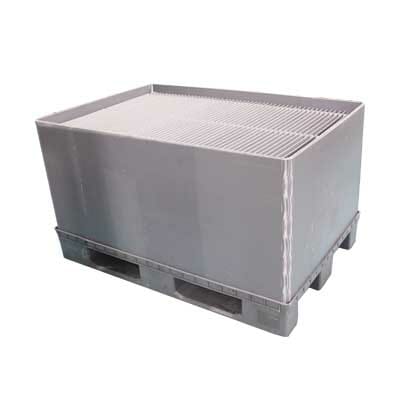
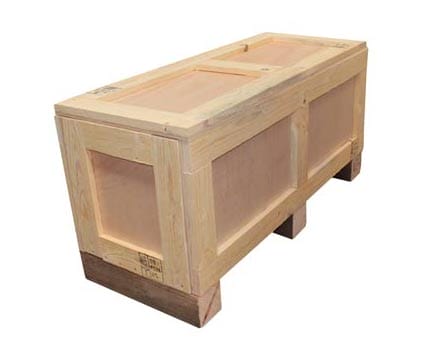
Using bespoke pallets is particularly prevalent when they are part of a composite pack or when the pallet forms the base of a cardboard pallet box.
However, bespoke pallets have several inherent advantages and disadvantages, making them suitable only for some businesses.

Advantages of bespoke pallets
Benefits of using bespoke-sized pallets
For the correct application, there can be significant benefits to using custom-sized pallets. The advantages of bespoke pallets include:
- Being able to accommodate large or oversized products.
- Improved weight distribution and safety for difficult items.
- Increased space efficiency.
- Reduction in transport costs.
- Improvements in sustainability.
- Allows for increased optimisation of packaging.
Accommodating large products
The primary use of bespoke pallets is to size them to accommodate a specific product. This dimensional flexibility is essential for larger or bulky items that do not fit on a standard-sized pallet.
Bespoke pallets can also be manufactured to a specific strength for particularly heavy items.
As a result, bespoke pallets (and custom pallet boxes) are commonplace in aerospace, heavy engineering, and industrial manufacturing industries.

Improved weight distribution and safety for difficult items
Similarly, accommodating the size of a product is sometimes difficult because the weight distribution of a product or part makes handling on a standard-size pallet difficult.
Using a bespoke-size pallet allows you to manage any difficulties and enables easier, safer handling by forklift drivers and transport providers.
Increased space efficiency
It is not unusual for larger products to fit on a standard-size pallet, leaving much of the available space unused (e.g., it only takes up 70% of the available footprint). In this scenario, there is 30% empty space for every pallet stored in your warehouse.
Bespoke pallets can eliminate this, allowing much more efficient use of space.
Reduction in transport costs
Similar to storage, tailoring your pallet size to the product you are shipping can enable more efficient transport (and, in turn, lower costs).
By maximising the number of products you can fit into a single shipment and not paying for the effective transport of fresh air, you can see significant reductions in your transport costs.
Improvements in sustainability
A reduction in transport costs – through improved efficiency – tends to go hand in hand with lower emissions.
As a result, the overall sustainability of your packaging and shipping operations improves. This advantage is particularly true if using timber pallets, as these are often reusable across multiple trips, are recyclable, and can be part of FSC-certified packaging (using material from sustainable sources).

Allows for increased optimisation of packaging
A final way bespoke pallets can help your business is through improved pallet optimisation.
If it is not possible for your staff to efficiently stack the packaging of smaller, individual units you are shipping in bulk on a pallet, this can also result in wasted space in transit. Whilst pallet-optimised boxes are crucial here, sometimes looking at the pallet size you are using is the easiest way to improve your operations.
Disadvantages of bespoke pallets
The potential negatives of bespoke pallet sizes
Although bespoke pallets are a must in some applications and can yield significant benefits in others, many scenarios call for standard-size pallets.
The disadvantages of using bespoke pallets include:
- Higher purchasing costs.
- Longer lead times.
- Inefficient storage and shipping.
- Rejection by transport providers or customers.
Increased costs
Standard-size pallets are an “off-the-shelf” product, with manufacturers able to mass-produce them cost-effectively. Bespoke pallets, however, are usually made in lower volumes without the same efficiencies or economies of scale.
As a result, bespoke pallets cost more than standard pallets. However, you must consider the additional upfront cost against the potential savings you could make (e.g., through improved transport efficiency).

Longer lead times
Being manufactured bespoke also means custom pallets have longer lead times than standard pallets (which suppliers often hold in stock).
If you choose to use bespoke pallets, you must ensure you have planned your expected usage and stock level requirements.
Inefficient storage and shipping
Although bespoke pallets can lead to more efficient transport and storage, they can also be less efficient.
Confused? Well, most transport providers are set up to accommodate standard-size pallets, meaning they are generally efficient by default. Whilst custom pallets eliminate wasted space on the pallet, they may lead to wasted space in the truck or shipping container instead, negating any benefit.
As such, if you are not using a bespoke pallet to accommodate an oversized item, careful analysis of the whole supply chain is required.

Rejection by transport providers or customers
Some transport providers may not be able to accommodate custom-sized pallets. The reasons can include potential inefficiency, as detailed earlier, but can also be because they do not have suitable equipment to handle them.
This latter point may be equally true of your customers, who can’t manoeuvre or store custom pallets because of their existing warehouse setup.
Summary
Applications where you should consider custom pallets
Bespoke pallets are essential for shipping large or particularly heavy and bulky items. They are often the only solution for some products or parts.
Whilst you can use custom pallets to optimise your pallet packaging, there are various factors to consider before deciding whether they are right for your business or application.
As bespoke size pallet manufacturers, GWP can advise on whether using a custom size would be the best option for your business. If you are considering a switch or have an upcoming project that requires bespoke pallets, please get in touch with our team of packaging experts.
About the author

Stuart boasts over 20 years of top-level experience as a packaging design engineer, in roles at Insit Moulded Packaging (IMP) and Macfarlane.
Important note
Due to the regulated nature of the topic in this guide addresses (timber packaging) we have taken extra steps to ensure its accuracy and reliability. You can find out more in our content policy.
All information is, to the best of our knowledge, accurate and correct at the time of publication. Please also note that, as all scenarios vary, not all information contained in this guide may apply to your specific application. There may also be specific regulations or laws, not covered within this particular guide, that apply. Please view the list of timber packaging regulations for further details.
Share this article
Further reading


Products in this guide




Get in touch
For full details on how GWP treats your data, please view this Privacy Policy. Your info is not shared with any third party.
Related guides
What is ISPM 15? A comprehensive guide for packaging requirements
Export crating – why it’s essential for international shipping
7 advantages of using wooden export crates (and 5 disadvantages)
Export packing lists – 10 crucial details to include in 2025
Export packing guide – 7 considerations for international shipping
17 reasons to switch to returnable transit packaging
Analysis: Single trip packaging vs returnable packaging
Transit cases – how to decide which is right for you
Shipping cases: 5 options for safe transit of your goods