






Analysing wooden export crates
Are wooden crates suitable for your export packaging requirements
If your business produces heavy, large, or bulky items, should you consider wooden export crates for safely and securely shipping your products?
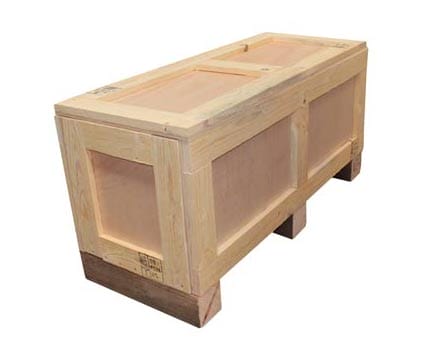
Wooden export crates are robust containers made of timber, including plywood, OSB, and chipboard. They are popular for the safe packaging and transportation of industrial parts, products, and equipment during international shipping.
However, in this guide, we’ll analyse whether wooden export crates are suited to various applications. We’ll take a look at the typical specifications of wooden export crates, the benefits of this type of export packaging, and the disadvantages of potential alternatives.

Contents
Introduction
Are wooden export crates a suitable option for your business?
Selecting the correct export packaging is essential for your business. International shipping can pose several challenges, including preventing damage, complying with regulations and legislation, freight capacity, and the not insignificant costs.
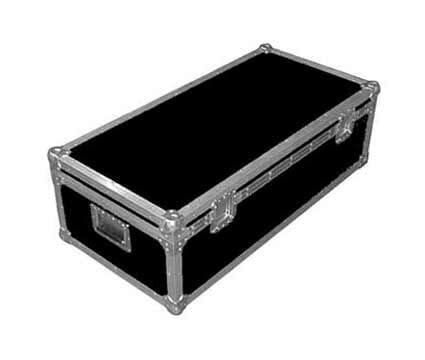
There are also various forms of export packaging, including cardboard pallet boxes, specialist cases such as flight cases or roto moulded options, and even large plastic pallet boxes.
However, wooden shipping crates are arguably the most widespread and popular form of export packaging.
The benefits of wooden export crates
The popularity of wooden export crates is due to their many advantages. The benefits of wooden shipping crates include:
- Wooden shipping crates provide excellent strength and durability.
- Wooden export packaging is typically cost-effective.
- Crates manufactured from timber can offer good levels of security.
- They use natural materials in their construction.
- Wooden export crates provide a degree of reusability.
- Timber packaging is recyclable (and biodegradable).
- Businesses can heavily customise crates to suit specific products or applications.

Strength and durability
Crates provide excellent protection against transit damage
One of the critical benefits of wooden shipping crates is their durability and strength. These properties make them inherently suited to protecting large, heavy, complex items during transit.
They are largely resistant to knocks, mishandling, and impact, protecting contents during their time in transit. As a result, they help to minimise instances of damage during shipping.
In turn, fewer (if any) items arrive damaged, preventing the need for costly returns, replacements or refunds. It also ensures happy customers can improve customer loyalty and repeat business.
Cost-effective
Wooden export packaging is typically cost-effective
Wooden export crates are relatively inexpensive compared to alternative options such as plastic dolavs, GRP containers, or rotationally moulded cases. They are, however, more costly than heavy-duty corrugated packaging.
However, it is essential that you consider all costs, not just the initial price of your crates.
As wooden export crates can be manufactured in custom sizes, they can help enhance protection, minimising costs that are associated with damage. They can also improve transport efficiency – and therefore costs – by preventing the shipping of empty space.
Widely accepted
Offer a good level of security
Although it is easy to overlook, due to their popularity and widespread use, wooden export crates are widely accepted by ports, freight providers, and businesses taking delivery of goods.
Whilst there are several standards and regulations that the crates must adhere to, for example, ISPM 15 heat treatment of timber, it is generally straightforward to use wooden crates for your export packaging.
Natural materials (and their properties)
Natural materials are used in the production of timber packaging
Wooden export crates use natural materials in their construction. Besides the obvious sustainability benefits, the material’s properties provide many benefits, too.
Timber packaging is typically manufactured using softwood due to its lighter weight (than hardwood), better shock absorption, ease of workability, and cost-effectiveness.
Softwoods, such as pine or spruce, are also more abundant, grow faster, and are generally more sustainable. Additionally, some softwoods offer natural moisture resistance, contributing to the protection of contents during transportation.
Reusability
Providing a degree of reusability
Suppliers usually design wooden export crates as a “single-trip” solution. However, the reason for this is simply that it is often not cost-effective to return the empty crates for reuse after the initial delivery.
Due to their durability and longevity, you can use wooden export crates as part of a returnable supply chain loop or repurpose them for other applications.
Recycling and repair
Timber packaging is recyclable and biodegradable
The timber used to manufacture wooden export crates is fully recyclable at the end of its usable life. As export packaging is mainly for B2B (business-to-business) applications, well-established waste and recycling streams are typically available post-shipping. They are also biodegradable.
However, it is essential to note that, besides recyclability, the construction of wooden export crates makes them repairable. This feature means that, even if they become damaged, it is possible to repair and reuse them.
Customisable
Customise crates to suit specific products and applications
Arguably, the most crucial benefit of using wooden export crates is their customisation options.
As already highlighted, the provision for custom sizes can significantly improve product protection during transit by minimising the potential for movement within the case. Bespoke-size crates also reduce shipping costs through improve space efficiency.
However, other options, particularly integral pallets for improved handling and manoeuvrability or foam inserts for additional cushioning, can frequently make wooden export crates the most suitable packaging for a vast range of applications.
5 disadvantages of wooden export crates
Limitations of timber for export packaging applications
Unsurprisingly, wooden export crates have their own drawbacks, too. The disadvantages of wooden export crates include:
- Wooden export crates can be excessively heavy.
- Timber can be affected by moisture and inclement weather conditions.
- Wooden crates can provide less security during shipping.
- Other export packaging can offer increased protection.
- Wooden crates can be less sustainable than other packaging types.

Weight
Whilst softwood is considerable lighter than hardwood, timber export crates are still among the heaviest forms of packaging.
Although this poses little of an issue for sea freight or road transit, it makes timber cases expensive if shipping by air. For this, lightweight contains such as aluminium cases are frequently more cost-effective.
Moisture
Softwood is more water-repellent than hardwood, but it is still susceptible to moisture. It also does not keep contents dry if it becomes wet (and is definitely not submersible).
If it is vital that the parts of equipment you are shipping do not become damaged by water, plastic cases like roto-moulded options or GRP containers are usually the better choice.
Similarly, moisture ingress can make wooden export crates unsuitable for ferrous metal products (which could suffer from corrosion) unless additional VCI packaging is employed.
Protection
Whilst wooden export crates are solid and robust, they can split, be punctured, or splinter in cases of severe mishandling.
Whilst this is unlikely, other forms of export packaging, such as protective cases, can mitigate this potential.
You should also consider that the protection provided by timber crates – as with most other export packaging – can be improved further with a range of inserts (particularly foam). Timber can also be an essential component of most composite packaging for particularly technical or demanding packaging requirements.
Security
Wooden export crates offer slightly less security than most other forms of shipping packaging (with the exception of corrugated cardboard packaging).
Timber can be relatively easy to cut, whilst nailed and even screwed, panels can be prised apart if a thief is determined enough.
Whilst this is a very minor consideration, other forms of export packaging may be more suitable for very high-value items (that would be attractive to thieves).
Sustainability
Finally, although wood is a natural resource you can recycle, wooden export cases may find their way into landfills at the end of their life.
Similarly, if the timber used to construct the crates is not from sustainable sources – such as being FSC-certified – it can lead to several other environmental issues (for example, deforestation).
It may also be the case that, as part of a returnable supply chain, export packaging with a longer lifespan (including plastic) may be a better option (through reduced use of resources).
Summary
Advice on choosing and using wooden export crates
Deciding on the right export packaging and whether to use wooden shipping crates can seem quite daunting. With tick boxes to check and regulations to follow, you are far better off finding a packaging provider who can both supply the packaging you need and ensure it is the best option for your application.
At GWP, and as part of Macfarlan, we have extensive experience manufacturing wooden export crates to the exact specifications you require. Crucially, we also offer a range of alternatives, ideally placing us to provide you with genuinely impartial advice on the export packaging most suited to your application.
So, if you would like further information and advice on wooden export crates and whether they are a good fit for your business, please don’t hesitate to get in touch with our team of packaging experts.
About the author

Stuart boasts over 20 years of top-level experience as a packaging design engineer, in roles at Insit Moulded Packaging (IMP) and Macfarlane.
Important note
Due to the regulated nature of the topic this guide addresses (export packaging), we have taken extra steps to ensure its accuracy and reliability. You can find out more in our content policy.
All information is, to the best of our knowledge, accurate and correct at the time of publication. Please also note that, as all scenarios vary, not all information contained in this guide may apply to your specific application. There may also be specific regulations or laws, not covered within this particular guide, that apply. Please view the list of export packaging regulations for further details.
Share this article
Further reading


Products in this guide




Get in touch
For full details on how GWP treats your data, please view this Privacy Policy. Your info is not shared with any third party.
Related guides
What is ISPM 15? A comprehensive guide for packaging requirements
Export crating – why it’s essential for international shipping
Maritime packaging – 7 essential characteristics
Export packing lists – 10 crucial details to include in 2025
Export packing guide – 7 considerations for international shipping
17 reasons to switch to returnable transit packaging
Analysis: Single trip packaging vs returnable packaging
Transit cases – how to decide which is right for you
Shipping cases: 5 options for safe transit of your goods