






Packaging industry predictions
GWP’s packaging experts predict their expected 2026 trends
If you’re responsible for packaging in 2026, you’re facing a more challenging and complex landscape than ever before, and staying aware of expected packaging trends is essential to your success.
Tighter environmental regulations, economic uncertainty, and rising customer scepticism around sustainability claims look to be shaping the year ahead. At the same time, packaging is increasingly expected to deliver stronger branding, better customer experiences, and more transparent communication, without increasing cost or waste.

So what should businesses expect over the next 12 months?
In 2026, packaging trends are likely to include a shift away from complex plastics, strong demand for paper-based alternatives, growing use of digital features, and a renewed focus on honest, human-centred design. Regulation will play a defining role, particularly through modulated Extended Producer Responsibility (EPR) fees and stricter rules around environmental claims.
At GWP, we look ahead each year to help businesses prepare for what’s coming next. Based on economic forecasts, regulatory changes, and emerging packaging trends, in this blog, we have outlined our key packaging predictions for 2026, and what they mean in practice for brands, manufacturers, and supply chains.
Predicted packaging trends for 2026
The top packaging trends for 2026, predicted by our team of experts, include:
- Economic and employment pressures will influence packaging decisions.
- Regulatory changes and modulated EPR fees will reward recyclability.
- Smart packaging and AI-driven solutions will improve efficiency and engagement.
- Circular economy and reusable packaging will expand in eCommerce and retail.
- Material costs remain volatile, with PFAS scrutiny and sustainable alternatives gaining focus.
- Design, print, and consumer experience will continue to evolve without increasing material use.
- Recycled materials, particularly foam, will gain traction in protective applications.
Contents
Economic and employment pressures in 2026
Ruth Cook | GWP Group Managing Director

Ruth was one of the original founders of GWP Group, having worked in various roles throughout the business before becoming Managing Director in 2019.
Her broad knowledge makes her ideally placed to comment on the packaging trends likely in 2026.
Slower economic growth will keep pressure on costs
Economic growth in the UK is expected to remain steady but unremarkable in 2026. GDP is forecast to sit between 1.0% and 1.3%, with stronger growth unlikely until 2027.
That may sound reassuring, but in reality, it means most businesses will continue to operate within tight margins.
Consumer spending is forecast to grow only modestly, and business investment remains cautious. For packaging teams, this means a clear, straightforward truth: every packaging decision must earn its place.
In practical terms, this is driving renewed focus on right-sizing, material reduction, and transit efficiency. Overspecified packaging is becoming harder to justify, both environmentally and financially.
Top tip: If you haven’t reviewed your packaging sizes, material weights, or pallet efficiency in the last 12 months, then 2026 will be the year to do it. Small changes can deliver recurring savings.

Employment changes will reshape packaging operations
The labour market adds another layer of pressure, with unemployment forecast to rise to around 5.2% in 2026, while wage growth is expected to slow towards 3%.
On paper, that might suggest easing labour costs. However, in practice, skills shortages persist, especially in technical, compliance, and operational roles.
This is one of the reasons that packaging simplicity is gaining momentum. Complex packs take longer to assemble, are most likely to be assembled incorrectly, and require more training. All of that adds cost when teams are already stretched.
Clear pack formats, standardised materials, and intuitive designs help businesses do more with smaller or less specialised items.
Pro tip: Test how your packaging performs in real-world conditions. Is it easy to pack, seal, store, and identify? If not, complexity could be costing more than you think.

AI will deliver practical and efficiency gains
In 2026, AI will no longer feel new in packaging; it will feel normal and increasingly necessary.
Research suggests that AI can reduce manufacturing costs by 20-30% through automation and predictive maintenance. It’s also improving supply chain visibility, cutting lead times by up to 25%, and reducing excess stock and waste by 15-20% through better forecasting.
Those numbers matter significantly in a low-growth economy.
AI is also speeding up packaging design and development. Variations can be tested digitally, concepts refined more quickly, and personalisation made more accessible, particularly in the eCommerce sector.
Interestingly, the faster technology moves, though, the more brands need to lean into human touches. Hand-drawn graphics, tactile finishes, and nostalgia are being used to keep packaging warm and relatable.
Top tip: Use AI to remove friction and waste, not character. Speed is valuable, but brand personality still needs a human hand.
Regulation, sustainability, and transparency
Matt Dobson | GWP Group Marketing Manager

Matt joined GWP over 13 years ago.
As marketing manager, he has worked across all divisions of the GWP Group, allowing him to gain a solid understanding and overview of all facets of the packaging industry. Here are his 2025 packaging trend predictions.
Modulated EPR fees will materially change packaging costs
2026 will be the year sustainability regulations start to have a real financial impact on businesses.
The UK’s Extended Producer Responsibility (EPR) legislation will introduce modulated fees. These fees are based on the recyclability of your packaging under the Recycling Assessment Methodology (RAM).
Packaging materials rated “green” (widely recyclable) will attract lower fees, while materials rated “red” (not recyclable) will face higher costs. For plastic packaging, red-rated materials will incur a 20% fee increase in 2026/27, rising to 100% above the base fee by 2028.
For businesses, this makes recyclability a financial issue: packaging that hasn’t been assessed defaults to a red rating, meaning inaction could be costly.
The "greenwash" hangover will intensify
Years of bold sustainability promises are now colliding with reality, and as pledge deadlines approach, many brands are struggling to deliver against earlier commitments.
Consumers are becoming increasingly sceptical, and regulators are responding. From September 2026, the EU’s EmpCo Directive will significantly tighten the rules on environmental claims.
Generic terms such as “eco”, “green”, or “climate neutral” can no longer be used without clear, verifiable evidence. This applies to marketing copy, packaging, labels, and even brand names.
The age of vague green storytelling is over, and brands that are honest about their limitations and clear about what their packaging can and can’t do will be better placed to maintain consumer trust.

Recycling clarity will matter more than ever
Multiple logos, symbols, and regional differences have often left consumers unsure what to do with packaging once it has been used.
The OPRL (On-Pack Recycling Label) scheme provides simple guidance, using clear “Recycle” or “Do Not Recycle” labels based on whether at least 75% of UK local authorities collect that particular material.
Whilst mandatory labelling has been postponed for now, greater consistency is coming, but in the meantime, packaging that clearly explains how to dispose of it will stand out. Clear on-pack communication reduces contamination, improves recycling outcomes, and builds credibility with your consumers.
Opportunities for circular and reusable packaging
Emily Parker | GWP Correx® General Manager

Emily joined GWP Group in 2014 as part of the newly launched GWP Correx.
She quickly became an integral part of the team and is now the General Manager for the Correx, Conductive, and Coatings divisions. This experience makes her incredibly knowledgeable in the area of returnable packaging.
Quick commerce will drive significant packaging and warehouse improvements
Quick commerce, as many industry analysts are calling it, is the rise of faster, often same-day fulfilment. Whilst increasingly adopted by Amazon, quick commerce is also growing in the grocery delivery and fashion sectors. Some predict that even one-hour deliveries will become increasingly prevalent.
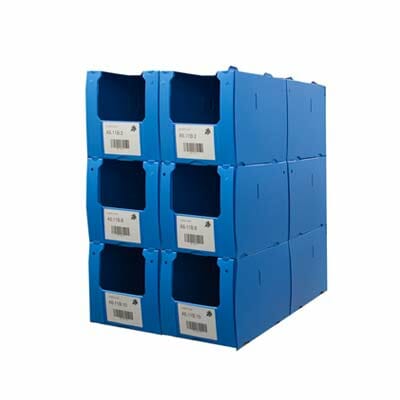
An increasing number of local fulfilment centres and hubs are required to support this. As these develop and mature, their requirements for advanced order picking tactics will increase, as will their need for suitable picking bins.
With consumers demanding ever-faster delivery of their online orders, businesses with the best warehouse setup and processes could gain a distinct advantage.

EPR could lead to returnable packs becoming increasingly important
The introduction of modulated fees under the Extended Producer Responsibility (EPR) scheme will prompt brands to accelerate their transition to reusable packaging.
As returnable packs would only incur fees when the first products are returned, if retailers could establish return transport or processes, reusable packs could quickly become more cost-effective than traditional single-trip packaging (such as corrugated packaging and poly mailers).
With forecasts estimating that parcel carriers will collectively distribute 1.4 billion shipments across the UK during the 2025 peak season, the opportunity is clearly enormous.
However, this isn’t without its challenges, including the need to change consumer culture (the majority of whom see packaging as disposable). Returnable packs could also hamper personalisation efforts, which are becoming increasingly important in the current competitive climate.
Material pricing, supply, and appearance
David Mason | GWP Packaging Sales Director

David has worked in the packaging industry for over 30 years, joining Great Western Packaging (as GWP Group was then known) not long after its formation in 1990.
As a result, David has exceptional knowledge and understanding of the corrugated packaging market.
Volatility will remain a defining feature
Material pricing across the UK and Europe remains fragmented heading into 2026.
Graphic paper grades continue to face downward pressure, while containerboard prices are expected to firm as eCommerce demand grows. The UK corrugated packaging market itself is forecast to grow at around 3% CAGR through to 2029.
At the same time, the Extended Producer Responsibility scheme, trade tariffs, and new regulations like the EU Deforestation Regulation are adding costs and complexity to supply chains.
This isn’t a market that rewards rigid thinking.
Top tip: Packaging designed to work across more than one material grade or supplier gives you options when prices move, and they will.
PFAS moves into focus
PFAS (polyfluoroalkyl substances) have historically been used in packaging to provide grease and moisture resistance, particularly in paper-based formats. However, increasing regulatory scrutiny around their environmental persistence is pushing brands to reassess these materials.
As restrictions tighten across the UK and EU, businesses may face changes in material availability, lead times, and costs as PFAS-free alternatives are adopted for applications such as food, takeaway, and eCommerce packaging. Early engagement with suppliers is recommended.
Personality returns to packaging design
Print and appearance continue to play a bigger role in packaging decisions for 2026, even as sustainability and cost pressures increase.
Digital printing has matured to the point where bold colours, sharp details, and textured finishes are now more achievable on recycled and recyclable materials, without compromising on performance.
In eCommerce packaging, appearance matters more than ever. Packaging is often the first physical interaction a customer has with your brand, making the unboxing moment part of the overall experience.

Clean designs, thoughtful print, and considered finishes can elevate your pack without adding extra layers or materials.
What’s changing is how impact is achieved. Instead of heavier materials or complex constructions, brands are using more innovative layouts, stronger typography, and a selective use of colour to stand out from the crowd.
Top tip: Good design doesn’t require more materials; it usually just needs more creative use of the ones you already have.
Smart packaging will move beyond novelty
Smart and digital packaging is becoming more practical, with QR codes, NFC tags, and printed electronics increasingly being used to share product information, verify authenticity, and support brand storytelling.
For food and beverage brands, smart indicators can help to monitor freshness or tampering, reducing waste and improving safety.
In 2026, packaging will increasingly act as a digital bridge between brands and consumers.
Recycled materials and protective packaging
Richard Coombes | GWP Protective General Manager

Richard has been at GWP Protective and its predecessor, Eastman Packaging, for over twenty years.
Working across the business, from the shop floor to sales support, and currently as General Manager, he has developed an intricate understanding of the protective case and foam conversion markets.
Recycled foam will continue to grow
Protective packaging will continue to be under increasing scrutiny, particularly where plastic is involved, but your packaging’s performance must not be compromised.
As pressure mounts on single-use plastics, recycled foam solutions are gaining market share. They offer reliable protection for high-value goods while supporting recyclability targets, and in some cases, exemption from the Plastic Packaging Tax.
This is where recycled foam is gaining ground; it offers strong protection for fragile or high-value goods while improving recyclability and supporting mono-material strategies.
And as Extended Producer Responsibility (EPR) fees continue to rise, these materials are becoming increasingly commercially and environmentally attractive.
Top tip: If damage risk has kept you tied to traditional foams, it may be time to reassess what recycled alternatives can now deliver.

The bigger picture: The great plastic reckoning
Beyond the recycling bin
Consumers are becoming increasingly aware that a lot of packaging that is labelled “recyclable” never actually gets recycled. That awareness is changing behaviours and expectations.
In 2026, trust will be built through simplicity, honesty, and realistic solutions. Mono-materials, paper-based alternatives, reusable systems, and clear labelling will matter more than perfect claims.
The brands that simplify their packaging, explain their trade-offs, and design for real-world disposal will stand out and earn consumer trust.
Summary
Packaging trends to expect in 2026
Packaging in 2026 must work harder than ever; it needs to protect products, support brand identity, comply with regulations, manage costs, and stand up to scrutiny, all at once.
The common threat across our predictions is practicality, smart technology with a purpose, sustainability that is backed by proof, design that balances with personality, and materials that are chosen not just for image, but for long-term performance and compliance.
If you want to future-proof your packaging for 2026, now is the time to review your materials, designs, and supply chain.
If you are excited about the opportunities or concerned about the challenges posed by the predicted packaging trends in 2026, please get in touch with our team of packaging experts. They are on hand to guide your business and ensure your packaging delivers real value.
Share this article
Further reading


About the author
Matt joined GWP in 2012 as Marketing Manager, and is now involved with sustainability and the promotion of Macfarlane’s manufacturing businesses.
Products in this guide


Get in touch
For full details on how GWP treats your data, please view this Privacy Policy. Your info is not shared with any third party.
Related guides
What is the packaging extended producer responsibility (EPR)?
11 branding ideas for printed eCommerce boxes and packaging
Extended Producer Responsibility (EPR) fees explained
Analysis: Single trip packaging vs returnable packaging
45 bite-size tips for improving warehouse management
Wood foam packaging – what is it, and should you be using it?
Peli™ Case alternatives – 11 Pelican™ style cases to consider
Manufacturing productivity – 11 tips to improve your performance
Packaging Waste Regulations – A quick guide
Green packaging: 7 crucial benefits for your business
Sustainable postal packaging – 6 options for your business
2025 packaging trends – expert predictions for the coming year
Sustainable foam packaging options available to your business