







Introduction
Why satellite packaging deserves serious attention
If you’re involved in satellites – designing them, building them, moving them, or simply signing off the budgets – if you work with them in any capacity, then you’ll already understand that although they are designed to survive launch and operate in orbit, they can be compromised long before they ever leave the ground.
That’s where specialist satellite packaging comes in.
Satellite containers are often treated as an afterthought, something to resolve after engineering is complete and the schedule has become tight.
In reality, they play a critical role in protecting your satellite’s performance, managing the risks, and keeping your mission on track.
In this guide, we’ll explore five key considerations you should pay attention to when sourcing packaging for your satellite: performance, specifications, compliance, suppliers, and the realities that sit between them.
Contents
A detailed understanding of your satellite
Accurate measurements and requirements
Before any packaging solution can be designed or procured, there must be a clear, shared understanding of the satellite itself, and that understanding should extend beyond its overall dimensions and gross weight.
Efficient packaging depends on understanding where the mass is most concentrated, which subsystems are most sensitive, and how loads move through the structure during handling and transportation.
Optical assemblies, deployable mechanisms, RF hardware, and flight electronics all have different tolerances for vibration, shocks, temperature changes, and humidity.
Packaging that doesn’t account for these differences risks being overly restrictive for sensitive components or leaving them without proper support and protection.

Operational context also matters, as a satellite moving between Manufacturing, Assembly, Industrial, and Transport (MAIT) facilities for testing and integration faces different risks than one travelling directly to a launch site.
Storage duration, potential launch delays, and the number of handling stages all influence how robust and adaptable the packaging needs to be.
Environmental limits should be defined early on. Acceptable temperature ranges, humidity thresholds, vibration sensitivity, and pressure changes during air transport will all shape decisions around insulation, isolation systems, sealing methods, and internal support structures.
When this information is properly understood and communicated, packaging becomes a controlled engineering exercise rather than a reactive one. The result is better protection, fewer assumptions, and less potential risk during handling and transportation.
Why is special atteniton required?
Satellites are advanced systems with complex components that are precisely aligned to tight tolerances and often sensitive to relatively small environmental changes.
During transport and storage, they are exposed to temperature fluctuations, humidity, vibrations, shock, contamination, and repeated handling. Individually, these risks can be managed, however combined, they can quietly introduce damage that isn’t immediately obvious, but might affect its performance and reliability later.
A slightly stressed connector, a slightly misaligned optic, or prolonged exposure to moisture can all have consequences that only appear much later.
This is what makes satellite containers different from conventional protective packaging. It’s not just about preventing the obvious damage; it’s about maintaining controlled conditions, managing cumulative stresses, and ensuring the satellite arrives in exactly the same conditions that it left.
Five considerations when sourcing satellite packaging
The five things you can't afford to get wrong
When sourcing satellite packaging, these key considerations tend to fall into five overlapping areas:
- Performance under real-world conditions.
- Physical and technical specifications.
- Quality, compliance, and risk control.
- Supplier capability and logistics requirements.
- Transportation considerations.
You can’t just prioritise one as over-engineering one area while neglecting another is how costs balloon and risks creep back in.
Performance requirements
Understanding what your satellite needs from its packaging
Your satellite packaging must actively manage the environment around the satellite itself. That means temperature, humidity, vibration, pressure, and contamination – managed simultaneously and continuously, without issue.
For starters, thermal stability, a slow drift from 18°C to 30°C, can be more damaging than a short spike if materials expand unevenly. Humidity, meanwhile, has a habit of creeping. A relative humidity rate (RH) below 60% is often cited. Sensitive electronics may demand much less; desiccants help, but only when paired with the proper vapour barriers and a controlled approach to sealing.
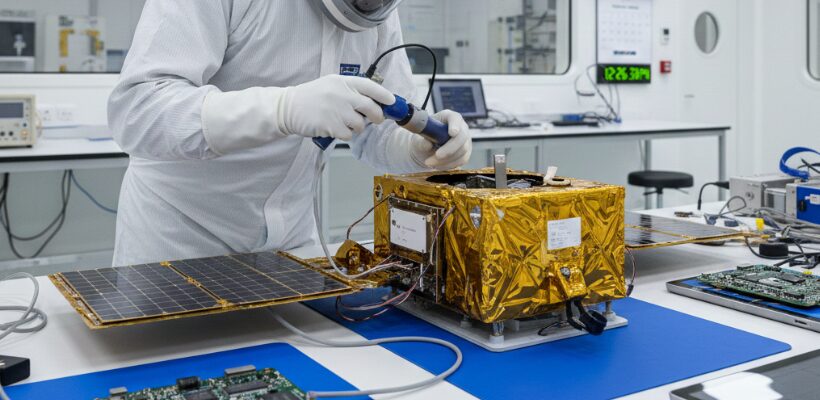
Then there’s vibration: persistant, increasing, and often underestimated. Road transport alone can generate complex vibration profiles that weaken delicate assemblies long before anything actually breaks. Without isolation, components suffer quietly. Damping converts energy into heat, and isolation blocks the transmission path; the best systems use both.
Pressure management plays its part too. Maintaining a slight positive pressure inside a container reduces the risk of contamination ingress, especially during air transport and altitude changes. It’s a small detail, but it’s an important one.
Physical and technical specifications
A clear understanding of your specifications
Accurate dimensions and weight data reinforce almost every packaging and transport decision you’ll make. They influence packaging design, lifting arrangements, vehicle selection, route planning, and cost estimation. A small mistake can have major downstream effects.
Transport restrictions need to be considered early on in the process.
Road transport brings width, height, and length limits unless specialist equipment is used. Air freight introduces its own dimensional restrictions. Sea freight changes the environmental risk profile altogether. Packaging must be designed with the chosen transport modes firmly in mind.
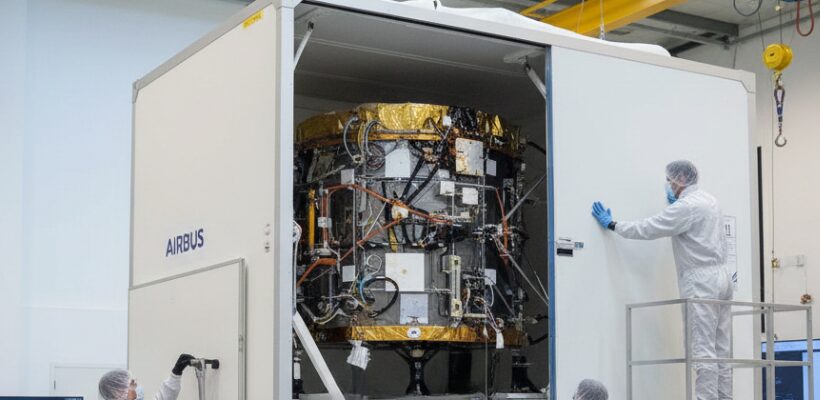
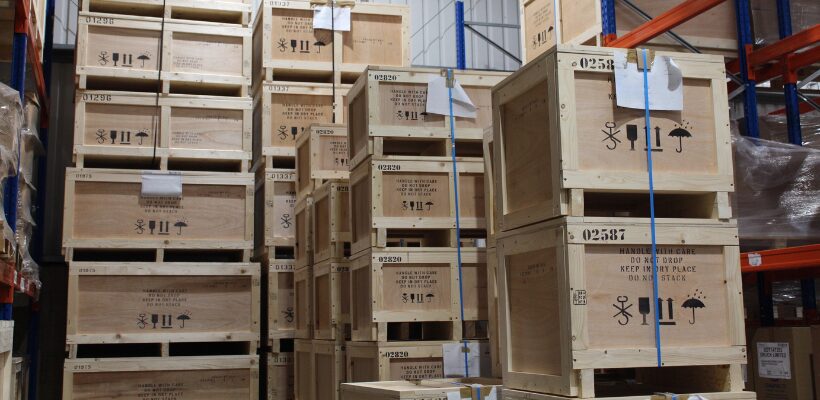
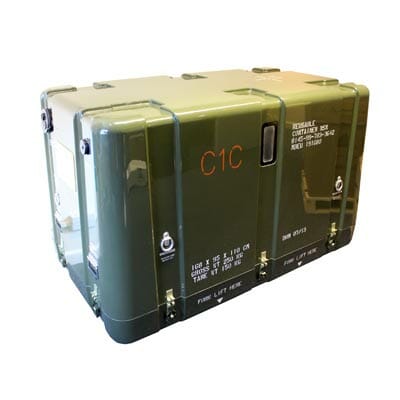
Material selection is another key consideration. Aluminium alloys are commonly used for their strength-to-weight ratio and corrosion resistance. Composite materials can further reduce weight but require careful engineering. Marine-grade plywood still has a role, particularly when combined with internal steel structures and properly designed load paths.
Internally, bracing systems must prevent movement without introducing excessive stress to the payload. Loads should be distributed evenly, and sensitive areas should be supported appropriately. Over-restraint can be just as damaging as inefficient support.
This is also where packaging overlaps with electronics integration. Rack-mounted systems, vehicle-installed hardware, and flyaway configurations each pose distinct challenges, particularly regarding shock, vibration, and environmental exposure.
Quality, compliance, and risk management
Keeping your satellite packaging compliant
Satellite containers sit within a complex regulatory environment. Export controls, custom requirements, aerospace quality standards, and security protocols all need to be addressed correctly and early on.
Standards like AS9100 Aerospace Quality Management provides a framework for quality management, while regulations such as International Traffic in Arms Regulations (ITAR) and Export Administration Regulations (EAR) govern the movement of sensitive hardware. Failure to comply can result in delays, penalties, or worse.

Traceability is essential here. Materials, components, and processes should be documented so that any issue can be investigated quickly and accurately. This is mainly important for high-value, low-volume hardware with long lead times.
Risk management extends beyond compliance, too. Contingency plans, emergency procedures, named points of contact, and appropriate insurance cover all form part of a strong approach. The values should reflect the true value of the payload, and insurance coverage should match the risks associated with the chosen transport routes and modes.
Quality in this context is as much about organisational discipline as it is about the quality of your build.
Supplier evaluation and logistics
Selecting the right packaging partner
Not all packaging suppliers will understand, even if they are highly capable in other sectors. Satellite programmes benefit from working with partners who are familiar with MAIT operations, launch site logistics, extended storage, and the realities of programme change.
Supplier experience should include an understanding of vibration environments, environmental control, and aerospace documentation requirements. The ability to respond quickly, produce prototypes, and adapt designs as programmes evolve is increasingly important.
Sustainability is also becoming a major consideration. Reusable containers, recyclable materials, and foam-free designs can reduce environmental impact while often improving consistency and long-term cost efficiency.
Cost should be assessed in context: the cheapest packaging solution is rarely the most cost-effective when risk, rework, delays, and potential damage are all factored in.
Transportation requirements
How will your satellite travel?
Transport is where packaging design is ultimately tested. Different modes introduce different risks, and packaging must be tailored accordingly.
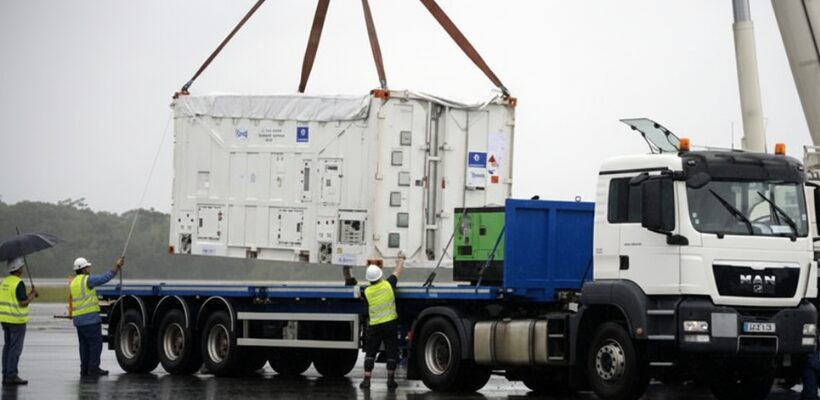
Oversized satellite structures may require breakbulk shipping, while smaller assemblies may be suitable for full-container or less-than-container loads. Sea transport presents challenges related to humidity and salt exposure. Air transport introduces pressure changes and dense handling environments. Road transport delivers sustained vibration and repeated shocks.
Specialist vehicles, lifting equipment, and trained handling teams are essential. Securement methods must be designed for the payload using appropriate lashing, blocking, and bracing techniques.
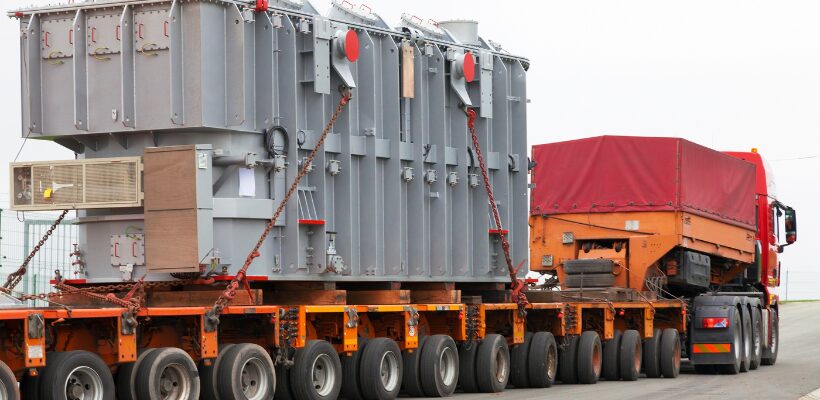
Route planning is a critical but sometimes overlooked aspect. Bridge heights, turning ranges, weight limits, permits, and escort requirements all need to be considered in advance.
Monitoring and tracking systems close the loop with GPS tracking, shock and temperature logging, and regular communication, allowing issues to be identified and addressed before they escalate.
Finally, delivery is not the end of the process. Controlled unloading, inspection, and verification on arrival are essential to confirm the satellite’s condition and document any issues.
Summary
Packaging is part of the mission
Satellite packaging sits at the intersection of engineering, logistics, and risk management. When done right, it protects your hardware, schedules, and reputations. When done poorly, it introduces risk at the very moment a package should be reducing it.
By focusing on performance, understanding physical and technical constraints, managing quality and compliance, choosing experienced suppliers, and designing for real transport conditions, organisations can significantly reduce the likelihood of avoidable issues.
Satellite packaging should be approached as a system rather than a commodity. Every solution should be designed to reflect the hardware, the journey, and the realities of the space sector.
About the author

Kalon has strong knowledge and experience of timber, heavy duty and composite packaging, and holds an MPAS certification.
Important note
Due to the sensitive and regulated nature of the topic this guide addresses (satellite packaging) we have taken extra steps to ensure its accuracy and reliability. You can find out more in our content policy.
All information is, to the best of our knowledge, accurate, and correct at the time of publication. Please also note that, as all scenarios vary, not all information contained in this guide may apply to your specific application. There may also be specific regulations or laws, not covered within this particular guide, that apply. Please view the list of packaging regulations for further details.
Share this article
Further reading

Products in this guide




Get in touch
For full details on how GWP treats your data, please view this Privacy Policy. Your info is not shared with any third party.
Related guides
What is ISPM 15? A comprehensive guide for packaging requirements
What is ATA 300 packaging? General requirements and specifications
7 advantages of using wooden export crates (and 5 disadvantages)
Export packing lists – 10 crucial details to include in 2026
Export packing guide – 7 considerations for international shipping
Transit cases – how to decide which is right for you
Shipping cases: 5 options for safe transit of your goods
Equipment damage: 8 causes of products breaking in transit
7 tips for shipping high-value equipment, tools, and parts
Returnable packaging containers: options and applications
Foam conversion – what is it, and how it benefits your business